Why the Ozarks are Becoming One of America's Fastest-Growing Outdoor Hospitality Destinations
Over the last several years, something very interesting has been happening in the Ozarks.
Branson, Table Rock Lake, and the surrounding outdoor recreation markets are quietly evolving from traditional tourism destinations into one of the most compelling experiential hospitality regions in America.
And I do not think most people fully realize it yet.
Historically, Branson was known for theaters, music shows, family attractions, and bus-tour tourism. The history still matters, and it remains one of the foundations that built the area into a resilient tourism market. But the next chapter of the Ozarks is increasingly being shaped by outdoor hospitality, experiential lodging, wellness travel, nature immersion, glamping, lake culture, and restorative travel experiences.
That shift is already visible everywhere you look.
Johnny Morris' Thunder Ridge Nature Arena overlooking Table Rock Lake is one of the clearest examples. Rather than building another enclosed venue, the project embraced the outdoors itself as part of the entertainment experience.
Branson Landing followed a similar philosophy years ago by building an outdoor retail and entertainment district instead of an enclosed mall. Attractions like Dogwood Canyon Nature Park, Top of the Rock, Table Rock Lake, the Ozark Mountains, and the rapidly growing trail systems throughout the region continue reinforcing the same broader trend:
People increasingly want experiences connected to nature.
That is not just a local observation. National tourism and hospitality data increasingly support it.
The Outdoor Recreation Roundtable reported that the outdoor recreation economy reached $1.2 trillion nationally and continues growing faster than the overall U.S. economy.
At the same time, wellness tourism and experiential travel continue accelerating as travelers increasingly prioritize emotional restoration, outdoor environments, and meaningful experiences over purely transactional lodging.
The Global Wellness Institute estimated that wellness tourism exceeded $800 billion globally and continues growing rapidly.
That matters for the Ozarks because the region sits at the intersection of several powerful travel trends simultaneously.
drive-to tourism
outdoor recreation
affordable luxury
wellness travel
experiential hospitality
lake tourism
family travel
short-term rental demand
Branson also benefits from something many tourism markets do not:
Accessibility.
For decades, Branson has been considered one of America's strongest drive-to vacation markets. Families can reach the Ozarks without expensive airfare, which historically helps the region remain resilient during economic slowdowns or periods of higher travel costs.
That practical accessibility is part of why the Branson tourism market has maintained remarkable consistency over time.
Explore Branson has reported nearly 10 million annual visitors in recent years, with tourism growth significantly outperforming broader national leisure travel trends.
But what makes the Ozarks especially interesting from a hospitality perspective is not just the tourism volume.
It is the land itself.
There is still space here.
That becomes increasingly valuable in a world where many travelers are emotionally exhausted by density, overstimulation, constant noise, and nonstop digital interruption. People want connection, but they also increasingly value the ability to choose quiet, privacy, nature, and restoration when they need it.
That is one of the reasons outdoor hospitality, glamping resorts, experiential retreats, luxury cabins, treehouses, and wellness-oriented hospitality concepts are gaining traction throughout the Ozarks region.
The environment naturally supports them.
And I think many hospitality operators are only beginning to understand how powerful that trend may become over the next decade.
The short-term rental industry itself also plays a major role in this evolution. Since the rise of Airbnb and VRBO following the 2008 financial crisis, travelers have increasingly shifted toward larger experiential accommodations that offer kitchens, gathering spaces, lake access, firepits, outdoor amenities, and emotionally memorable environments.
The industry is also beginning to professionalize rapidly.
A recent article from House & Hemisphere described how the short-term rental market is increasingly separating into two categories: generic commodity inventory and professionally operated experiential hospitality.
That distinction is incredibly important.
Because the Ozarks are uniquely positioned for the experiential side of that evolution.
This region already possesses the lakes, terrain, forests, outdoor culture, entertainment infrastructure, and drive-to accessibility that travelers are actively seeking.
The next phase is thoughtful hospitality development that integrates those advantages intentionally rather than treating nature as a backdrop.
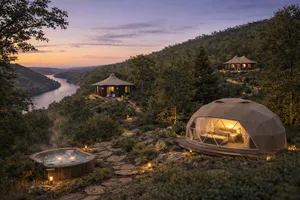
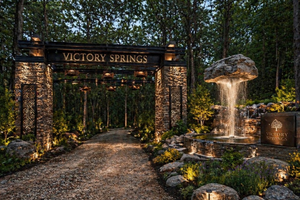
That is one of the reasons Victory Springs is being designed as a nature-forward experiential hospitality project rather than simply another lodging development.
The goal is not maximum density.
The goal is emotional experience.
That means preserving trees where possible. Creating spacing between units. Integrating outdoor gathering environments. Creating opportunities for kayaking, fishing, wellness, campfires, and lake experiences that help people feel restored rather than overstimulated.
Because increasingly, that is where travelers are searching for.
The Ozarks are no longer simply becoming a place people visit.
They are becoming a place people come to recover.
Curious where hospitality, experiential travel, and STR investing are heading next?
I spend time studying emerging trends, investor behavior, hospitality systems, and experiential real estate development.
If you would like to continue the conversation, you can schedule time with me directly.