The Hospitality Industry Misread Short-Term Rentals. Then It Became Terrified Them
For years, the hospitality industry largely dismissed short-term rentals.
And honestly, I understand why.
Imagine spending decades learning hospitality operations at the highest levels. Labor management. Revenue management. Guest satisfaction systems. Food and beverage operations. Brand standards. Physical hospitality infrastructure. Franchise systems. Staffing logistics.
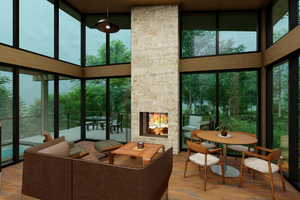
Then, suddenly, some guy with a lake cabin and an Airbnb account starts taking market share from billion-dollar hotel brands.
Of course, the hospitality industry rolled its eyes at first.
"This isn't real hospitality."
And early on, in many cases, they were right.
A lot of short-term rental operators were not hospitality professionals. They were teachers. Firefighters. Side hustlers. Real estate investors. Every day, people trying to create a better life for their families.
But then something happened that the hospitality industry didn't expect.
The market started choosing them anyway.
And that's when dismissal turned into fear.
Because once short-term rentals started taking real market share, the conversation shifted almost overnight from:
"These people aren't real operators..."
to:
"Why aren't they regulated like us?"
And honestly, that question misses the point entirely.
Because a short-term rental is not simply a hotel room without a front desk.
It's an entirely different hospitality product.
That distinction matters.
The hospitality industry has spent years trying to force short-term rentals into the same regulatory and operational framework as hotels. And to be fair, some regulation absolutely makes sense. Residential neighborhoods need protection. Safety standards matter. Responsible operation matters.
But philosophically, a short-term rental is not the same thing as a traditional hotel room.
It may appeal to some of the same travelers...
...but the experience itself is fundamentally different.
When five executives stay in a house together, something entirely different happens.
They bond.
They stay up late talking around a kitchen island. They drink coffee together in the morning. They continue conversations after the "meeting" is technically over. They build actual human connections while still having the ability to retreat into private bedrooms when they need space.
That's not a small difference.
That's an entirely different hospitality dynamic.
I think most hospitality executives already understand this, whether they admit it publicly or not.
Because if you really ask them how they travel with their own families, many of them are choosing short-term rentals too.
Why?
Because the experience is different.
The short-term rental industry exploded because it gave ordinary people the ability to share something meaningful that they loved with someone else.
A lake house.
A cabin.
A farm.
A treehouse.
A place that meant something to them.
And guests felt that.
That's why passionate operators won early.
Not because they had the best systems.
Because they cared.
Hospitality executives often underestimate the emotional layer because traditional hospitality has become so operationally standardized that it sometimes forgets hospitality is ultimately about human feeling, not just operational efficiency.
But now the industry is maturing.
And that's where this gets really exciting.
Because the future is not amateur operators vs hotels.
The future is a merger of both worlds.
The short-term rental industry discovered operational efficiencies the hotel world couldn't initially adapt to because legacy systems made flexibility difficult. Lean staffing. Automation. Dynamic pricing. Experience-driven travel. Emotion-based destination marketing. Technology-enabled operations.
Meanwhile, traditional hospitality executives still understand things many STR operators badly need to learn:
service consistency
staffing systems
emotional hospitality
operational scale
physical hospitality environments
guest recovery systems
long-term brand building
That combination is powerful.
And I believe it's where the future of hospitality is headed.
Not hotels.
Not scattered vacation rentals.
Something in the middle.
Boutique hospitality. Resort-style STR developments. Wellness hospitality. Outdoor experiential lodging. Hybrid hospitality environments that combine the operational efficiency of short-term rentals with the intentionality of great hospitality.
That's the bridge.
And the market data increasingly supports it.
According to reporting citing AirDNA market research, short-term rentals grew from roughly 8% of the U.S. accommodations market in 2018 to approximately 15% by 2023. That is an extraordinary shift in market share in a relatively short period of time.
Meanwhile, demographic and behavioral trends continue to favor experiential travel. Millennials, now the largest adult generation in America, according to Pew Research Center, consistently prioritize experiences, flexibility, group travel, and emotional value over standardized lodging experiences.
That matters.
Because hospitality is changing.
People don't just want a room anymore.
They want memory.
They want connection.
They want atmosphere.
They want a story worth remembering.
And the operators who understand how to combine operational intelligence with emotional hospitality are the ones who are going to shape the next generation of travel.
Because this industry was never really about beds.
It was always about people.
Curious where hospitality, experiential travel, and STR investing are heading next?
I spend time studying emerging trends, investor behavior, hospitality systems, and experiential real estate development.
If you would like to continue the conversation, you can schedule time with me directly.