Maybe You're Not Bored. Maybe You Finally Have Margin.
I'm a Gen Xer, which means boredom was basically included with childhood.
We didn't have unlimited entertainment in our pockets. We didn't have streaming services offering 40,000 things to watch. We didn't have an algorithm standing by twenty-four hours a day trying to determine which 17-second video would keep our attention from wandering.
Sometimes there was simply nothing to do.
So we figured something out.
We invented games. We explored. We annoyed our siblings. We rode bicycles somewhere we probably weren't supposed to go. We built things out of junk. We developed entire afternoons around whatever happened to be lying around because we had no money and apparently all the time in the world.
Boredom forced creativity on us.
There is actually some research behind that idea. A 2014 study found that participants who performed boring tasks subsequently demonstrated greater creativity on certain tasks, although later research on the boredom-creativity relationship has produced mixed results.
I don't need boredom to be scientifically prescribed medicine to recognize something we have lost.
We no longer leave enough space for our minds to go anywhere on their own.
I noticed this raising children. Somewhere along the way, I occasionally felt like my job as a dad included being the entertainment director.
That was definitely not part of my parents' job description.
Now I find the same thing happening to adults.
If we have two empty minutes, we pull out the phone. If dinner gets quiet, somebody checks something. If we sit on a porch long enough, eventually there is an almost physical urge to fill the space.
But what if the space is the point?
I have talked before about the difference between balance and margin. I don't think most people actually want balance. Balance sounds exhausting. What people want is enough margin in their lives that everything does not collapse when one thing goes wrong.
Maybe boredom is the emotional sensation we feel when we finally encounter margin again and have forgotten what to do with it.
That is an interesting hospitality question.
Branson already knows how to entertain people. If you want something to do, you can find something to do.
That is one of the great strengths of this market.
But maybe the highest-value experience at some point during your trip is getting bored enough to pick up a book.
Or getting bored enough to notice the birds.
Or getting bored enough to sit beside your spouse for forty minutes and finally have the conversation that keeps getting pushed behind emails, soccer practice, bills, and everything else.
Time in nature may help that process along. A large body of research associates exposure to natural environments with lower stress and improved attention and emotional restoration.
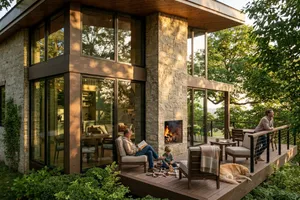
That is one of the reasons I like the idea of hospitality that does not feel obligated to constantly perform for you.
Victory Springs can exist next to one of America's great entertainment destinations while still permitting somebody to do absolutely nothing for a while.
No shame. No itinerary. No fear that you are "wasting the vacation."
Maybe what feels like boredom for the first twenty minutes becomes something else after an hour.
Maybe it is margin.
And maybe margin is one of the luxuries modern people have forgotten how to buy for themselves.