Maybe the Most Valuable Part of the Property Is What We Don't Build On
A developer usually looks at a vacant section of property and starts calculating.
How many units? How many lots? How much sellable square footage?
Those are legitimate questions. Land is expensive, infrastructure is expensive, and a project ultimately has to produce a return.
But experiential hospitality introduces another question that I think gets ignored too often:
What does this land contribute if we leave some of it alone?
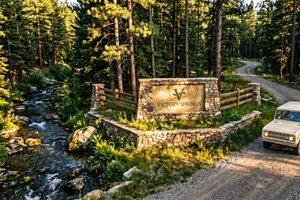
That question has become increasingly important to me as we develop Victory Springs.
There are pine trees on the property that are uncommon enough around the immediate site to feel special when you encounter them. There are old hollow trees that may never win a landscaping award but have a character you cannot recreate with something purchased from a nursery. There are places animals already use as habitat. There are pockets where the trees, rocks, elevation, and water have already designed something better than we probably could.
Maybe development does not always mean improving those places.
Maybe sometimes development means knowing when to stop.
Some of the most respected luxury hospitality brands have built their entire reputation around that restraint. Aman became influential in part by allowing landscape to remain dominant, creating low-density properties that feel connected to the terrain rather than imposed upon it.
There is also a growing body of research suggesting that exposure to green and blue spaces can support attention restoration, stress reduction, and emotional wellbeing.
From a hospitality standpoint, that changes how I value an untouched piece of ground.
The old hollow tree becomes more than a tree. It becomes something somebody's child discovers. A patch of woods becomes the reason a guest sees a deer in the morning. A little extra distance between buildings becomes the reason somebody feels comfortable sitting outside late at night talking quietly.
The land begins performing without having a structure sitting on it.
I think many developers miss this because the development model itself encourages them to.
If your economic event occurs when the unit sells, then an unbuilt piece of land may genuinely look like lost revenue.
But if you plan to operate the property for years, you eat your own cooking.
Every design choice stays with you.
The trees you remove stay removed. The density you create stays dense. The views you block remain blocked. The wildlife you push out does not necessarily come back because somebody later decides the property should feel more natural.
Victory Springs is being approached differently because we intend to operate the hospitality experience we are creating.
That creates a very different relationship with the property.
We still have to make the economics work. We still have to develop the land intelligently. We still have to build enough revenue-producing accommodations to justify the investment.
But I reject the idea that every square foot without a building on it is economically idle.
Sometimes the trees are working. Sometimes the quiet is working. Sometimes the wildlife is working. Sometimes the view is working.
And sometimes the most valuable development decision you make is deciding that a beautiful part of the land is already finished.