Great Hospitality Should Feel Effortless. That Doesn't Mean It Happens By Accident.
One of the interesting things about great hospitality is that the guest usually never notices how much work went into making it feel simple.
That's actually the point.
The best hospitality experiences don't feel operationally heavy. They don't feel forced. They don't feel overmanaged. They feel natural. Calm. Effortless.
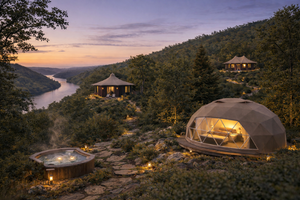
But behind almost every great hospitality experience is an enormous amount of intentional thinking.
That's something I've come to appreciate more and more over the years.
People often look at a resort or retreat destination and think they're simply booking a room. In reality, what they're experiencing is the result of thousands of small decisions being orchestrated together. The arrival flow matters. The lighting matters. The pathways matter. Maintenance standards matter. Landscaping matters. Noise control matters. Even the way a guest receives communication before arrival changes how they emotionally experience a property.
When those things are done well, the guest rarely notices them individually.
They just feel good while they are there.
And honestly, I think that is where hospitality is heading.
Not toward more chaos.
Toward more intentionality.
That's one of the things we spend a lot of time thinking about at Victory Springs.
How do you create an environment where somebody pulls through the entrance and immediately feels different?
Not because somebody hit them over the head with "luxury," but because the property itself starts helping them slow down.
That changes how you think about development entirely.
It changes how you think about guest flow, technology, amenities, maintenance, lighting, and even the emotional rhythm of a stay. The goal stops being "how many features can we add?" and becomes "how does this place make somebody feel?"
The hospitality industry itself is changing too.
For years, a lot of short-term rentals operated more like isolated real estate assets. One owner. One cabin. One manager. One experience. But travelers are beginning to expect something more cohesive. They want consistency. They want trust. They want thoughtful experiences that reduce friction instead of adding more decisions and stress.
That doesn't happen accidentally.
It requires systems. Standards. Communication. Long-term thinking.
Ironically, the better the operation becomes behind the scenes, the less guests should notice it.
The technology should feel invisible. Check-in should feel easy. Communication should feel thoughtful instead of robotic. The environment should feel calm instead of overproduced.
That's what separates hospitality from lodging.
And I think that distinction is becoming more important every year.
Especially in experiential destinations like the Ozarks.
People are no longer simply buying square footage. They're buying emotional outcome. They're buying restoration, connection, atmosphere, memory, and relief from the pace of normal life.
That's why I believe the next generation of hospitality development will be less about building more things and more about designing experiences that feel coherent from beginning to end.
Not louder.
Smarter.
Not more stimulation.
More restoration.
And honestly, I think the projects that figure that out are the ones people will continue returning to over the next decade.
My final thought? The best hospitality experiences usually feel simple.
But simplicity is often the result of an incredible amount of intentional work happening quietly in the background.
That's not accidental.
That's design.
Curious where hospitality, experiential travel, and STR investing are heading next?
I spend time studying emerging trends, investor behavior, hospitality systems, and experiential real estate development.
If you would like to continue the conversation, you can schedule time with me directly.