Families Travel Differently Now. Why Are We Still Designing Vacation Rentals the Same Way?
One of the first lessons I learned in the short-term rental business had nothing to do with pricing, photography, or occupancy. It was much more basic: if you are developing a four-bedroom nightly rental with one living area, stop. I mean that sincerely. Stop drawing for a minute and picture the people who are supposed to use the house.
A four-bedroom vacation rental is rarely occupied by four people who move through the day as a synchronized unit. It might contain parents, children, grandparents, cousins, friends, or several couples traveling together. Some people wake up at six. Others would prefer that six in the morning remain theoretical. Somebody wants the game on. Somebody wants to read. Teenagers want their own gravitational field. Small children seem to generate noise from physical laws we do not completely understand.
Put all of them into one living room, and you have not designed a gathering space. You have designed a negotiation.
Multiple living areas were one of the first principles I came to believe in strongly. Sitting areas count. Gaming areas count. Acoustics count. The way sound moves from one floor to another can change the experience of a house. A second gathering area is not wasted square footage when it allows two different parts of the same family to enjoy the same property at the same time.
That is why the headline of a recent MSN story featuring Victory Springs caught my attention. The article described modern families as groups that gather and separate, cook and rest, seek activity and quiet, often inside the same trip. That is exactly what years in vacation rentals taught me long before anyone gave the concept a name.
The family itself is also becoming more flexible. Hilton's 2026 Trends Report describes more three-generation travel, skip-generation trips with grandparents and grandchildren, and parents taking individual children on one-on-one trips. Among global travelers with children or grandchildren, Hilton found strong interest in involving younger family members in planning and in creating opportunities to play together. Hospitality design has to catch up with that reality.
The lazy approach is to count heads. How many bedrooms? How many beds? How many people can the listing legally say it sleeps? Those are necessary questions, but they are not sufficient questions.
The more useful exercise is behavioral. Where does the group naturally collect in the morning? Where do two adults go when they want a quiet conversation? Where do children make noise without becoming everybody else's soundtrack? Can an older traveler participate comfortably without having to follow the pace of the youngest person in the group? Can a teenager retreat without disappearing from the family altogether?
Cornell's hotel planning and design curriculum makes the same broader point from an institutional hospitality perspective: room mix, floor plans, public spaces and circulation should be developed around the target guest and the functions the property must perform. Cornell's hotel planning program treats design as an operating decision, not simply an architectural one, and vacation rentals deserve the same discipline.
For years, a great deal of short-term rental supply came from homes that were originally designed for somebody to live in. Then somebody bought the house, added beds, installed a keypad, and asked it to become hospitality. Sometimes that works beautifully. Sometimes it exposes the difference between residential shelter and a purpose-built guest experience.
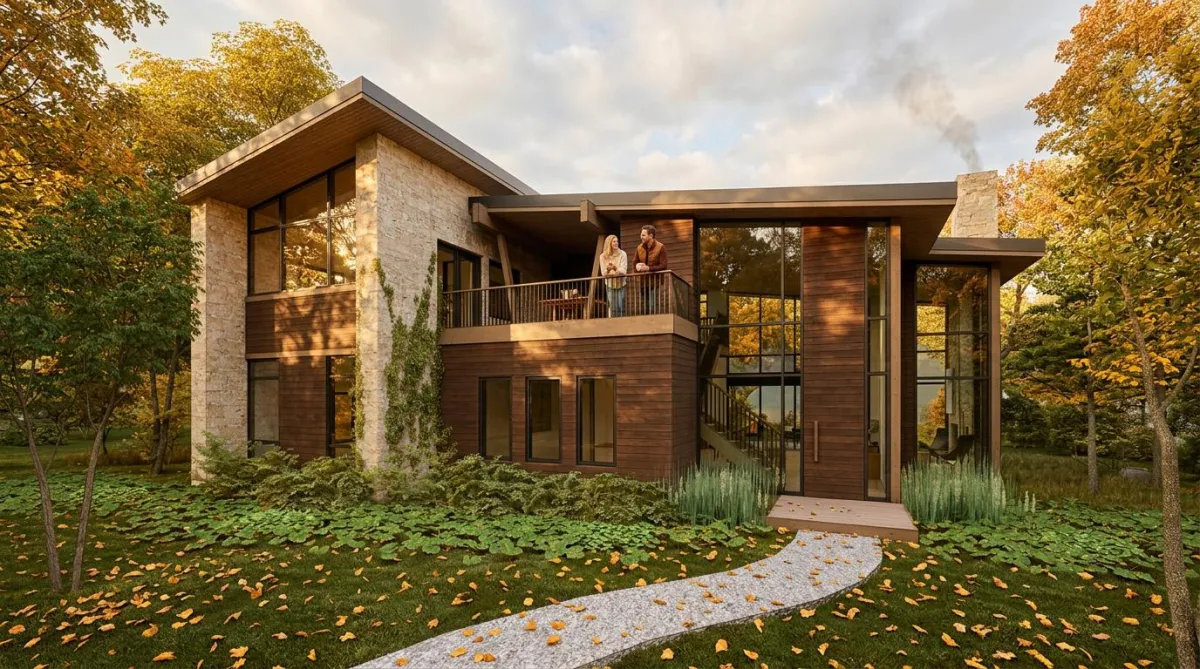
Victory Springs allows us to begin in the opposite direction. We are able to think about how couples, families and multigenerational groups may actually use a space before the guest ever arrives. We can think about privacy, indoor-outdoor flow, gathering, acoustic separation and the relationship between one accommodation and the next while those decisions are still relatively cheap to make.
This is not an argument for oversized buildings. Bigger is not automatically better. A poorly planned 5,000-square-foot house can be less functional than a thoughtful 2,500-square-foot one. The goal is not simply more room. It is the right kinds of room.
TUI's recent family travel analysis interestingly supports that point. Its travel advisors reported that parents often care more about room layout than raw room size, including separate sleeping areas that allow adults to continue their evening after children go to sleep. That is practical hospitality wisdom. Families do not stop being different people because they booked the same confirmation number.
At Table Rock Lake, the outdoor environment adds another layer. The deck can become a living room. The shoreline can become a gathering place. A trail can absorb three people who want activity while the rest of the group stays back. Thoughtful indoor-outdoor design expands the ways a family can occupy a property without requiring the building itself to carry the entire load.
We sometimes talk about hospitality as if the objective were to bring everyone together. I think that is only half correct. The better objective is to create a place where people can come together naturally, separate comfortably, and come back together without friction. That is how families actually travel, and our accommodations should finally start acting like it.