Don't Trust a Developer Who Won't Eat Their Own Cooking!
One of the more interesting criticisms I've heard over the last couple of years is the idea that "these guys aren't developers."
I think that depends entirely on how someone defines the word developer.
Because there are certainly developers who know how to clear land quickly, maximize density, create their margin, and move on to the next project. There is nothing unusual about that model. In many cases, that is simply how modern development works.
But I also think there is another kind of development philosophy emerging, especially in hospitality.
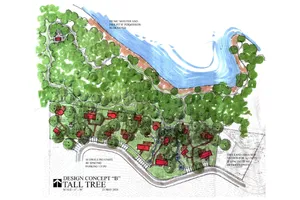
One that is less focused on extraction and more focused on experience.
One that understands the environment itself is part of the product.
One that approaches hospitality development with a combination of operational understanding, artistic restraint, land planning, and long-term stewardship.
And personally, I think many hospitality developers have missed a tremendous opportunity by focusing almost exclusively on maximum density instead of experiential density.
Because the easiest thing to do on a piece of land is usually to clear-cut it.
Flatten it.
Stack units together.
Simplify construction.
Maximize pad count.
That approach may simplify development logistics, but it often removes the very thing guests were emotionally searching for in the first place.
I saw this firsthand years ago in a community called Branson Canyon.
At the time, Branson Canyon stood out because it felt different from many developments in the area. It was a detached condo-style community, but instead of stripping everything down to rock and repetition, many of the mature trees and natural characteristics of the property were preserved.
I still remember contractors and painters complaining about having to work around the trees because it made construction more difficult.
But at the same time, guests were leaving comments saying something completely different:
"Even though this development is new, it feels like it has always been here."
That sentence stuck with me.
Because that is the entire point.
The best hospitality developments should not feel imposed on the land.
They should feel discovered within it.
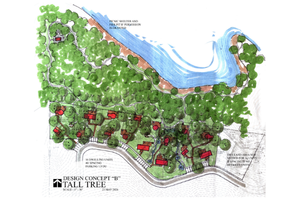
At Victory Springs, we've intentionally taken a more nature-forward approach because we believe emotional hospitality performs better when guests feel immersed in the environment rather than surrounded by overdevelopment.
That philosophy changes development decisions entirely.
It changes spacing.
It changes sight lines.
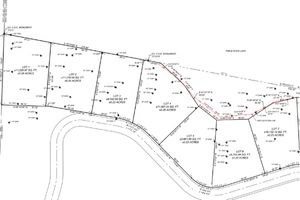
It changes road placement.
It changes tree preservation.
It changes how guests experience quiet, privacy, and atmosphere.
In portions of the Victory Springs planning process, mature trees larger than 13 inches in circumference were specifically surveyed and mapped so the natural canopy and terrain character could be thoughtfully integrated into the hospitality experience rather than automatically removed.
That process takes additional time.
It requires patience, restraint, and coordination between planners, operators, designers, and contractors.
But I believe the long-term hospitality result is significantly stronger.
Research around biophilic design and environmental psychology increasingly supports this idea as well. Studies have shown that natural environments, tree canopy, organic materials, and immersive nature experiences can positively influence stress reduction, emotional restoration, and overall guest well-being.
That should not surprise anybody.
People instinctively respond to environments that feel calming, natural, and emotionally restorative.
Especially now.
Modern life has become incredibly loud. Constant stimulation, stress, notifications, economic pressure, and nonstop information overload have changed waht people are seeking from hospitality experiences. Increasingly, travelers are not simply looking for a place to sleep.
They are looking for relief.
That is one of the reasons I believe experiential hospitality has such a strong future ahead of it.
And it is also one of the reasons I think developers who build strictly for immediate disposition sometimes miss the long-term opportunity.
Because you build differently when you plan to operate the hospitality asset yourself.
You think differently about durability.
You think differently about guest emotion.
You think differently about spacing, atmosphere, and return visitation.
If you were building a home you personally planned to live in for 20 years, you would naturally make different decisions than somebody building purely for resale.
Hospitality should work the same way.
At Victory Springs, we are not building something we intend to simply hand off and walk away from.
We are building a hospitality experience that we plan to operate.
And that operational mindset changes everything.
Curious where hospitality, experiential travel, and STR investing are heading next?
I spend time studying emerging trends, investor behavior, hospitality systems, and experiential real estate development.
If you would like to continue the conversation, you can schedule time with me directly.