Design the Experience: Building Outdoor Hospitality Guests Actually Remember
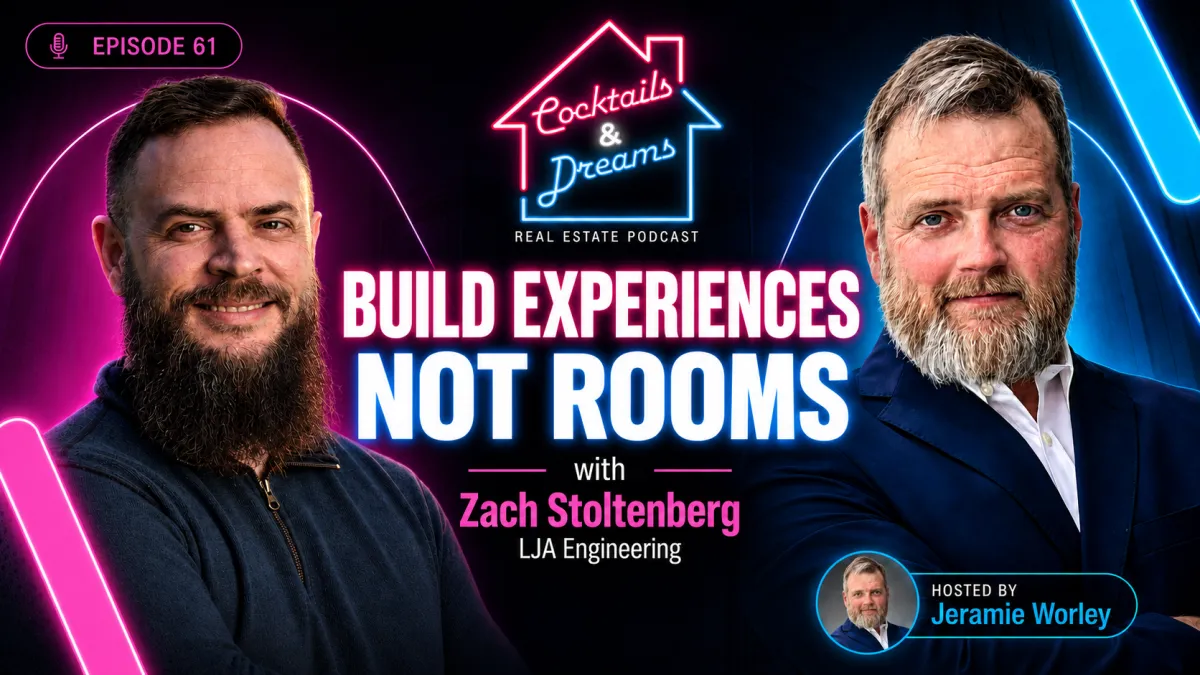
Cocktails & Dreams Real Estate Podcast with Jeramie Worley
Episode 61
Guest: Zach Stoltenberg
Title: Associate Principal of Architecture
Company: LJA Engineering
Most developers begin with the math: How many units can fit on the land? Zach Stoltenberg starts somewhere else. In his work across outdoor hospitality, glamping, RV destinations, and experiential stays, the first question is what the guest should feel, remember, and want to come back for.
In Episode 61, Jeramie sits down with Zach, Associate Principal of Architecture at LJA Engineering, to talk about what separates a memorable outdoor-hospitality destination from a collection of places to sleep. They get into site planning, authenticity, branding, amenities, preserving the natural character of the land, repeat visitation, and the small operational details that make guests feel like someone thought about them before they ever arrived.
The conversation also comes back repeatedly to Victory Springs and the Ozarks: how to use what is already special about a site, avoid copying what the market already has, and create enough variety that guests leave thinking about the next experience they want to have when they return.
Guest & Company Links
WATCH THE FULL EPISODE
https://open.spotify.com/show/2oWeHLsHQVSJJjU9GtRBBK?si=c8d75a9deed4411f
https://podcasts.apple.com/us/podcast/cocktails-dreams-real-estate-podcast/id1632712936
Editor's note: This transcript has been lightly edited for readability, punctuation, obvious speech-to-text errors, and proper names. The substance and conversational tone of the interview have been preserved.
From Eagle Scout to Experiential Stays
Jeramie Worley:
Hey, welcoming Zach Stoltenberg. And Zach, you have worked in a really interesting lane where architecture and outdoor hospitality, glamping, land planning, and maybe guest experience and all that development, they kind of overlap. So for people that may not know your story yet, how did you end up in this world, and kind of what pulled you towards designing that outdoor hospitality destinations and sort of more traditional buildings
Zach Stoltenberg:
Well, it's a long story, but to kind of summarize it, I like to tell people, you know, I grew up kind of camping and being outdoors. I'm an Eagle Scout. I loved, you know, going on family vacations.
Jeramie Worley:
Who was the president? Who was the president that signed your Eagle Scout card, Zach? Who was it?
Zach Stoltenberg:
Bill Clinton?
Jeramie Worley:
I think Bill Clinton. Mine was George Bush. The second George Bush. So congrats. Once an Eagle Scout, always an Eagle Scout.
Zach Stoltenberg:
Always. Yeah. So I, you know, I've always kind of loved the outdoors, and I like to think that I just, you know, now that I'm grown up, or I don't know, maybe I'm not growing up, but now that I'm older, I found a way to make that my job. So I think I've always kind of had a passion for the outdoors, professionally. I actually, I didn't start in outdoor hospitality, really. I kind of got involved with a project that was local to me, that was a large RV resort.
Jeramie Worley:
What is local to you, Zach?
Zach Stoltenberg:
I'm based in Kansas City. My family and I live just west of Kansas City in a small town. And, you know, it was interesting to me. I went to a public hearing. I thought it was a great project. I loved everything about it. And unfortunately, the developer who was doing it went about presenting it the worst way possible. And at the end of that meeting, I think residents were ready to run them out of town on a rail.
Jeramie Worley:
What was a bad presentation? Now, I'm curious.
Zach Stoltenberg:
I think there were a lot of questions that were asked that they didn't have answers to or hadn't thought about.
Jeramie Worley:
Okay.
Zach Stoltenberg:
There were some legitimate concerns, you know, traffic and noise and things that we encounter on any project. Some of them were really unreasonable concerns. You know, anytime somebody hears RV, they immediately jump to, oh, it's going to be a trailer park, right? And it's going to be drugs, and it's going to be, you know, violence, and the police are going to be there five times a day.
Jeramie Worley:
You do the low-end RV parks and the high-end RV parks; that's what you get. But yeah, the middle-class people.
Zach Stoltenberg:
But this was really a luxury park, and getting residents in a small town to realize that, you know, most of these RVs were over $800,000 and were more valuable than most of the homes in that town.
Jeramie Worley:
Wow.
Zach Stoltenberg:
It just, it didn't land. And so I grabbed these two guys after the meeting, and I said, you know, one, I want you guys to know, not everybody here is against you. I think this is brilliant. I think it'd be a great thing for our area. And they're like, I don't know. And I remember the one guy turned around and he looked at me, and he said, I'm not sure. I think this dog isn't going to hunt. And I said, no. I said, you just, you got to understand, like, how to go about this process. And he said, well, do you have time? Can we take you out for a drink or dinner or something? And I said, well, I got a little time. Yeah. And so went to a restaurant nearby and about two hours later had kind of formulated a plan.
And so they hired me. And I said, you know, guys, as an architect, I've been through this process numerous times, you know, planning and zoning. And I said, you know, look, there's standards in place. We gotta meet the standards. We need to talk to the community; we need to talk to people. We need to tell them what this is and what it isn't. And, you know, let's go back and try it again. And two months to the date, went back before the planning and zoning; we presented the project. We'd done two community outreach sessions. We still had the same five neighbors that were throwing a fit about it.
But the difference was this time there was about another 50 people in the room, and every time they brought up one of these sort of off-the-wall irrational fears, they were like, they talked about that at the community outreach meeting. Did you come to the community outreach meeting? Because they answered that question, you know, and so we actually had a lot of support going into that second meeting, and it got unanimous approval. And these guys took some of the materials that we put together, some of the renderings, the drawings, and started shopping it because they were looking for financing and investment. And that's when I started getting phone calls. And it was other developers that kind of saw the book that we put together, that saw the work that we did and said, this is incredible. And I've got land down in Oklahoma.
I've got land out in Arizona. I've got land. And so I think the first year I did two. The next year I did three. You know, that was in 2016. So 10 years later, I've done probably 80 or 90 different resorts. I think we'll cross over a hundred this year. Wow. And I'd say I still probably do 40% of what we do in RVs with the other 60-65 being a mix of glamping. We've done some boutique hotels. Really anything that is outdoor-focused and kind of an experiential stay. That's, that's the term that I prefer to use when somebody says, what do you do? I specialize in experiential stays.
Designing From Guest Experience, Not Just Unit Count
Jeramie Worley:
Well, let's talk about that a little bit kind of brings me to my next question. You know, a lot of people, they look at outdoor hospitality, and they think, I mean, a lot of developers, in some case- maybe not maybe outdoor developers, but developers in general, I would say they look at a piece of land and they think about math. You know, they think about how many units can I fit on this land? They clear-cut. But your work seems to start somewhere deeper than that. And when you first step onto a property, like what are you really trying to discover? Or when you look at a map or something, what are you looking for?
Zach Stoltenberg:
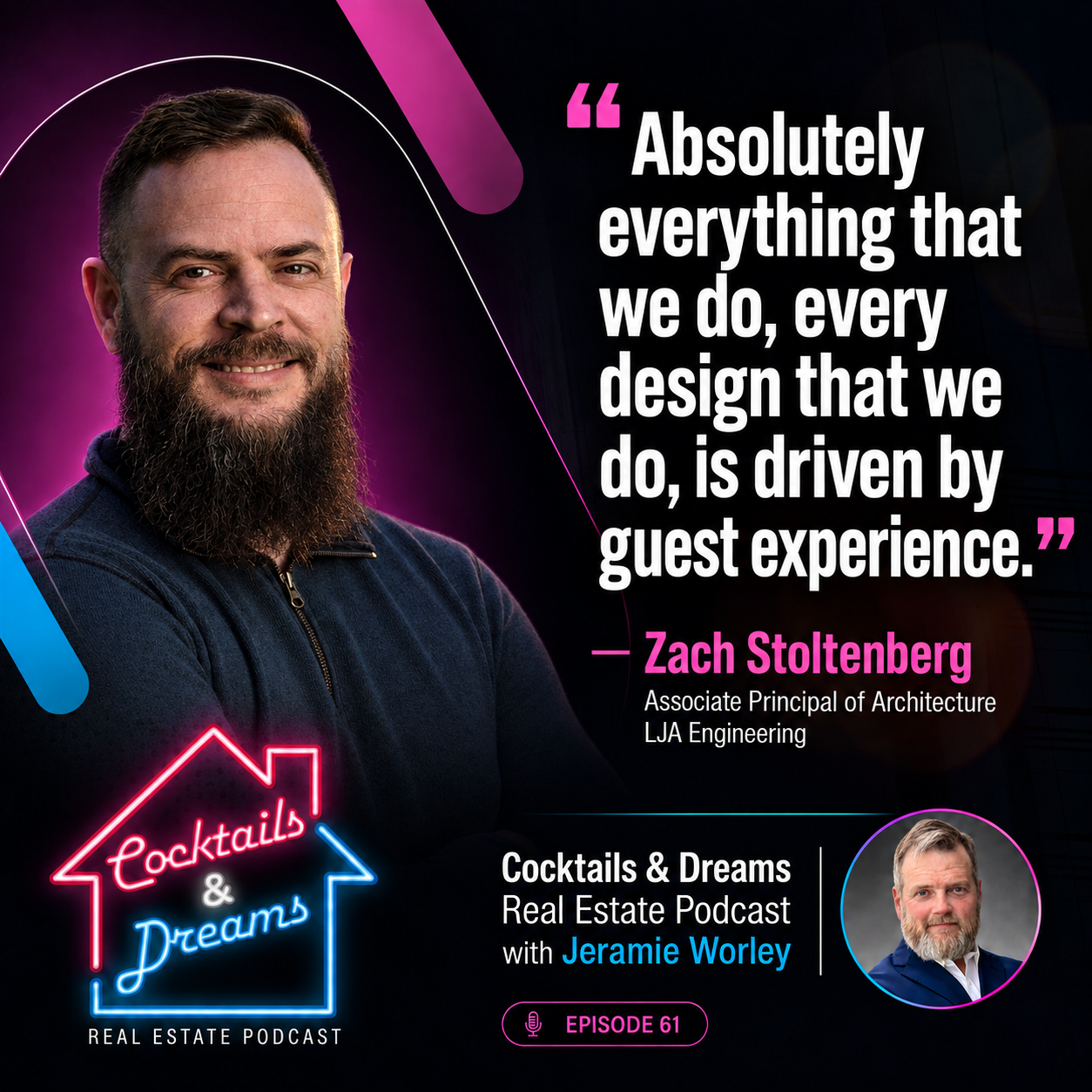
Yeah, so I think I would say absolutely everything that we do, every design that we do, is driven by guest experience. That is, number one, that's what should be guiding us. That's what leads us. Anytime you look at, why did they do this? Well, we were intentional about everything that we did. But I want to hit on something important that you just said. And that is, typically, developers look at it from a mathematical perspective. You can hand a hotel developer a parcel map and say, does this work for a hotel? And the first thing they're going to do is they're going to go pull a STR report. They're going to look at any feasibility studies for hotels that have been done in that area.
Zach Stoltenberg:
They're going to look at the land costs, they're going to plug it into their calculator, and in 48 hours they can tell you, yes, we can do a hotel; no, we can't. Or if we do it, here's exactly how many keys we can support and what kind of tier of flag that we need to look at. Right. Is this a budget motel? Is this, you know, mid-tier? Is this a Ritz-Carlton? All that data and those metrics under traditional hospitality have been honed over the last hundred years, and it's been optimized for that model.
Jeramie Worley:
Correct.
Zach Stoltenberg:
One of the things I love about outdoor hospitality is finally, now 10 years into this, we're starting to get some really good industry data. We're starting to get comps, the no STR report yet, but we're getting close. And there's a lot of consultants that I have partnerships with that are working on all of those things right now.
Jeramie Worley:
Great.
Zach Stoltenberg:
But we also don't have to follow the model because our revenue is not; we're not in the business of accommodations. You know, a good example I think of is we worked on a project out in Colorado, and a beautiful site on a river, had a quarter mile, half a mile of river frontage. And they said We want to do cabins. They were 30 minutes from a ski resort. They said We're not looking at any canvas, nothing soft-sided. We want to be open year-round. We get snow; we're going to have ski crowds. We want to do cabins. And we got a feasibility study back. Do you know how many freaking cabins there are in Colorado that you can rent? There's thousands. And the ADRs were soft on them. They were, you know, anywhere from 150 to maybe 225 a night.
Jeramie Worley:
Wow.
Zach Stoltenberg:
And if we'd have built cabins there, we'd have been upside down. They absolutely would have lost their ass on that development. Because that particular model, and approaching it just as accommodations, we were never going to be able to generate the revenues needed to offset the development cost on that property. And they came back to me, and they said, well, what do we do? I said, well, are you ready to look at Canvas or some other alternatives now? And they said, well, why? I said, well, you know, we were fortunate. This site, there was an established yurt resort, a yurt glamping resort, about 30 miles away from us.
Jeramie Worley:
Wow.
Zach Stoltenberg:
And we looked at their occupancy rates. They were over 90% occupied. They had six yurts on the site, and I think they were $425 a night. And so when you're talking to an experienced developer, especially somebody from that hotel world, a few other peripheries we've noticed a lot of mini storage developers are getting into this. A lot of people who have invested in mobile home parks or campgrounds and RV parks are getting into this. They know the metrics for those models. Right. And so when I talk to an experienced hotel developer, and I tell him, okay, here's the Way I want you to think about this. Average cost to build a hotel key right now is somewhere between $225,000 and $250,000, depending on the flag.
So you're going to spend $250,000 to build one hotel room, and your ADRs are set by whatever the market rate is for all the hotels that are surrounding you. And it's a race to the bottom because people always want to book the cheapest room. You've got some brand loyalty in there. You know, I'm personally, I'm a Hilton guy, and so, you know, I know some people are Marriott, some whatever. I will book a Hilton property over one of those other ones. But I still am looking for the cheapest room possible because I'm approaching it from the perspective of this as an accommodation. So when I break it down, and I say, okay, so you know, you can build a hotel room at 250,000 a key, and all you're getting is just a stay, just an overnight guest, heads and beds, right.
And you can make that model work with outdoor hospitality, with experiential stays. It's not an accommodation. It's, it's the whole experience beginning to end. It's, it's the stay, it's the F&B. It's the excursions or activities that they're going to book. It's the health and wellness pieces that they want to do while they're there. Right. It's the partnerships with other periphery activities that you can get, you know, finder's fees and referral fees off of. And by the way, our average ADR is going to be $400 to $600 a night. And the cost to build that unit up front is half of what it is to build a hotel room.
Jeramie Worley:
Exactly. When I was doing my financial model on, I took on lots one through seven, which is where we ended up, you know, putting our glamping units at Victory Springs. I realized that when I deleted seven homes, there was a certain amount of revenue that I deleted.
Zach Stoltenberg:
Right.
Jeramie Worley:
And I was able to buy back half of that revenue for a fifth of the cost.
Zach Stoltenberg:
Right.
Branding, Differentiation, and the Race to the Bottom
Jeramie Worley:
Crazy. And it's so good to talk to you, Zach, because I know we've talked a little bit here and there, but you are definitely a bro from another.... Because I would say that I have been saying these words for a long time. I feel like I'm in a cave by myself. And you are echoing the words that I've been saying for a long time, like a race to the bottom. Only in my scenario, it's been different. So what we've been doing for the past 15 years is helping developers create these products and then selling them as Airbnb to independent individual owners. That's also a race to the bottom because you take 60 different units, you tell it, sell it to 60 different owners. Yeah, sure. Everybody's a neighbor. They're also competing. And I've used those same terms, race to the bottom. So.
Which is why I really feel like the syndication approach is a little bit better because you can start to layer in those brand standards because right now you've got 60 different mattresses, 60 different response times, 60 different standards of what luxury is. But now we can actually set that standard because you're already talking about it, you're saying Hilton, you know, versus some other brand. Well, you may stay at a Motel 6, you may not, but you know what to expect. And I think that's the real opportunity in, I would say the short-term rental, you know, opportunity right now, I would say, is branding and, you know, an overall level of professionalism that doesn't exist with the onesie-twosie rental.
Zach Stoltenberg:
Right. And honestly, I think that's one of the things even in Airbnb and in short-term rentals that we're seeing. I actually met a really interesting guy earlier this year who's been developing Airbnbs out in Tennessee. And you know, you've got a lot of areas out there. You got Nashville, Pigeon Forge, major vacation destinations. And every Airbnb that he builds is an experience. He's got, he's got rooftop decks, he's got arcade rooms, he's got air hockey, he's got treehouse units, he's got, you know, resort-style pools, not just your backyard swimming pool. I mean, something like you would find at a luxury hotel. And these, all these houses sleep like 10 to 12 people. And he's building them. Purpose for, you know, families, extended families, groups of families. Hey, you know, there's three of us; we've been friends since college.
We've all got kids now. We're going to take a vacation together, and we're going to go to Pigeon Forge, and we want one place that we can all stay. Fun things in the house, things that stick out that, you know, like you said, you get 30 houses and beyond, different brands on mattresses. They're all kind of identical. right. And he said, I. In a saturated market like that, I've got to do something that differentiates. I've got to do something that grabs people's attention that they're like, you won't believe this place that we booked.
You know, so it is about the tornado slide that comes from the third-floor loft bedroom all the way down to the living room, you know, but again, it's approaching hospitality from that perspective of creating an experience that allows- it's a space that allows people to make memories, to spend time with each other, to, you know, go home with that Instagrammable photo of, you know, we had so much fun. and that's the things that are, I think, driving successful properties today.
Three Filters for Designing Outdoor Experiences
Jeramie Worley:
What would you say the biggest thing is? Because you did say that outdoor hospitality, especially, is more than, you know, a place to sleep. You said it's more; it's. We're not just selling accommodations anymore. And you did say that we're selling experiences. And I'm right there with you, 100%. We can have experiences. Branson, Missouri, don't get me wrong, is great at spectacle and great at, absolutely great at, mediocrity too. I mean, it is the home of the variety show. It's like, what is a variety show? It means I can't do one thing extremely well. I've got to do a lot of things, you know, fairly well and fool you into thinking we did a great job. You know, American flag, you know, all that stuff. It's, it's.
Branson is such a funny market, but people love it because it is a wholesome, low-cost family destination with lakes. And I love the Ozarks. I mean, I chose to live here until I retire. So, you know, when we're talking about selling an experience, what type of experiences would you say are the top three on the list that a resort like this or any other outdoor resort is a must-have?
Zach Stoltenberg:
As always, the answer is it depends on, you know, Branson especially is very unique. It is this, you know, this little Las Vegas, this just sort of anomaly when it comes there. I would say, you know, number one, when we approach any project, any design, we want to create experiences that are appropriate for the area. You know, am I going to do a palm frond resort-style swimming pool on a site in Branson? Probably not. I mean, one, the palm trees aren't going to live past the first winter, and two, that's not really appropriate for that area. Right. Like the Ozarks is great. It's got rich tradition, it's got history, it's got culture, it's got lots of fun things. And so number one, I say we look for what is appropriate to that area and that site. You know, design-wise, we're pulling from the local vernacular, things that look like they belong in that area, even pushing the boundaries a little bit. Right. Because I don't want to design something that looks like it was 100 years old. I want to design it so that 100 years from now people look at it and say, wow, that was really cool. So I think appropriate to the areas is number one. Number two, we look for saturation. In Branson, you've got the strip, you've got the variety shows, you've got theaters, you've got some of the cheesy. So in building a resort there, would I focus on anything like that? No, because you've already got it and you've got it elsewhere, and it's right down the road. You know, you're going to feed off of that; they're going to feed off of you.
You get that sort of symbiotic relationship. Right. If you got it off-site, then we don't have to create it on site. Would I tell you to do mini golf or go karts? No, there's 15 of them up and down that strip. Right. So we've got to do, we've got to focus on doing something that others are not doing. And then the third thing is taking advantage of the site. The driving force with outdoor hospitality is really looking at a property. You know, the first time we walk it, that first time, we're boots on the ground, and we're out there. And you stand out on that point. You're like, you know what, this view right here, this is something special. We could create an experience around this. So then what is it? Is that the view that you want?
The big campfire that everybody comes down to and does the s'mores buffet at night and watches the sunset down over the lake? You know, it's finding those spots, those moments that we can say, hey, this is special. And we're going to build an experience around this, you know, for the Ozarks, I think, and being on a lake, I would really focus on your waterfront. You know, things like paddle boats, stand-up paddle boards, canoes, kayaks, maybe even depending on your adventure level, you know, jet skis or a speedboat rental or a pontoon rental. Anytime you're on water, you got to take advantage of the water.
Jeramie Worley:
And of course, fishing. I own a micro.
Zach Stoltenberg:
Fishing is huge.
Jeramie Worley:
It has a private lake, and fishing is huge. Absolutely big time.
Zach Stoltenberg:
The highlight of every one of my summers growing up was going to visit my grandparents because I knew my grandpa would take me fishing. I'm 42 years old now. I probably have not been fishing in more than five years. And I love it. I love to go fishing. And, you know, if there was a place that I could book for my family for the weekend, and they said, hey, we've got the rods, we've got the bait, we've got everything set up. You literally can walk out in your pajama pants and sit at the end of the dock and cast off. That's an experience that I want to have.
Authenticity: Real Experiences, Not Gimmicks
Jeramie Worley:
You can, Zach. It's called Lake Longbow. And I would love for you to come out sometime to Lake Longbow because you can ride your four-wheeler trails. You can do all that. I love outdoor hospitality, and I love these experiences. And we actually do, like, executive hunting retreats out there to get people who are, like, super out of whack, you know, reconnected with the land and harvesting from the land, living off the land, and I love that. So let's talk about this since we're talking about it. So what makes a glamping or outdoor hospitality project feel authentic instead of gimmicky?
Zach Stoltenberg:
It's a great question, and it's something that we go through with every project we do. And it's something I've talked about for a long time now. I want to start with sort of why it's important right now. When we look at, you know, who is driving the markets for these alternative stays, the, you know, who are we marketing to? What's. What's our guest demographic? Millennials and Gen Z are in the driver's seat. And I could talk about millennials because I am one. I'm an elder millennial. I'm right on that cusp, you know.
Jeramie Worley:
And thank God, the millennials will save the world. You know, the millennials were lied to at every stage of the game. You guys graduated, and you did everything that all the baby boomer generation told you to do, and nothing was true from that point ever. You guys graduated and had no jobs whatsoever.
Zach Stoltenberg:
But as a result of that, Millennials are skeptical. Correct. And we don't trust anything, and we can smell bullshit from 10 miles away. And so the need for authenticity, for real experiences, it is important because it's trying to connect with millennials, with Gen Z that, you know, we've grown up. I had that analog childhood, digital teen, adult years. So I'm not quite as angsty and jaded as a Gen XER is, but right here I, I get that piece of it. Right. And so we've, for anybody, and Gen Z especially, that has grown up with a world not knowing anything without the Internet. Right. We're so used to seeing messages that are curated, that are one-sided, that are, you know, online.
It's sort of this digital facade that 60, 75% of it might be true, but most of it is, you know, made up for television. right. Reality TV. There's nothing real about reality television. It's all fake. And so I think for those generations, finding something that is real, that is authentic, that doesn't feel curated and polished, and you know, it doesn't have to be perfect. Honestly, sometimes when things go wrong, or they're less than what was expected, they're like, well, I read that one wrong. But you know, we're in for an experience, right? Like, it happens. But I think they almost prefer that versus something that is so polished and curated. And so I think authenticity is a huge driving factor in outdoor hospitality. For sure.
Jeramie Worley:
You're talking about advertising what's available on the land or what their experience might be like. What is authenticity in advertising? And you know, in your opinion?
Zach Stoltenberg:
I think it's about managing the guest expectation, okay? Not, not pretending that you are more than you are; creating a meaningful experience, charging a fair price for that something that you know, at the end of this day when somebody leaves and they know that credit card has been swiped, that they're absolutely 100% satisfied and happy to pay that they're wanting to book their next day before they even leave, that they don't feel like they were taken advantage of or it was a bait and switch or that they got less than what they expected.
Jeramie Worley:
Well, I'll tell you this. When I unplug at my lake home that I was telling you about, which is a lot of the inspiration behind what I want to do for Victory Springs. I mean that place for years, and I can only share that with so many people. And my question was, what if I did something like this only in a bigger tourism market? And I, and here's the thing- when I'm at that property, it's literally, I don't want to leave. Like I will sit there and just watch the sun go down, and I cannot get off my butt to go home and get plugged in with the rhythms of my daily life. And that nature-forward experience is what I wanted to do at Victory Springs, you know, in a section of it. And then of course, we'll have some.
Some very unique properties and some very upscale properties with private amenities, which I think is, you know, privacy is such a big deal, but also having community areas where people can kind of hang out, because getting people in connection with one another is also kind of cool, you know, to. Cause you got introverts, you got ambiverts, you got introverts, you got all the verts. And so you got to have something for everybody there and, you know, some gathering areas. But I think those private amenities take the stress off of those, you know, core amenities, because a pool is like a parking lot, in my opinion. You can't make it big enough. But three-fourths of the time, there's nobody in it, you know.
The Development Mistakes That Keep Projects Stuck
Jeramie Worley:
So what do you think that some of the biggest mistakes developers might make when they're trying to build outdoor hospitality projects?
Zach Stoltenberg:
What do I think the mistakes are or. Or what do I see as, like, things that come up repeatedly?
Jeramie Worley:
Your opinion is valid here, Zach.
Zach Stoltenberg:
Well, my number one it's going to be shameless self-promotion, and that is that they don't hire professionals. Okay, I see. You know, I mean, obviously we work in a niche market, and I see a lot of folks, especially some of the smaller developers or, you know, mom-and-pop, that are trying to get into this, that they think they can't afford to work with an architect or they can't afford to. To get engineering done on their property. And honestly, I think that's a huge mistake. You know, I have three to four phone calls a week with people about new potential projects. And a lot of the times, you know, the feedback we get is, oh, I, you know, I can't afford to spend for a master plan.
And my county doesn't even have an adopted building code, and, you know, they don't issue permits, so we're just going to wing it and go for it. And, you know, I'm sorry, like, I can't oversell that. I'm sorry, like, I, you know, so. So go for it. And those are the same people I talked to a year later that still haven't made any progress on their project. You know, if you can't spend $20,000, how are you going to spend the $2 million it takes to actually build what you're telling me you want to build? And so, you know, there's. There's lots of good people in this space. There's tremendous amount of resources out there. There's people who specialize in doing this and not. Not taking advantage of them. Trying to just go on your own is a mistake. We see a lot of.
Jeramie Worley:
Do you have anybody you want to plug for data or for resources or anything like that?
Zach Stoltenberg:
You know, we've got a lot of good partners, different people in the space. Campground Consulting Group does a great job. Jayne Cohen, Sage Outdoor Advisory. Shari Heilala. Shari and I have been friends for more than a decade. That very first project that I ever worked on, Shari did all the numbers for it, and she's really a leader in the industry. They've quite literally written the book and built the databases to track all this industry data. And they're, you know, Shari and Kristen are just two of the best, and we do a lot of projects. And I trust them. I don't hesitate ever to, you know, introduce a client to what, you know, one of those partners, because they've built that reputation in the industry that they are experts; they know what they're doing.
And we work really collaboratively with them because I can design something that's absolutely gorgeous, but if it doesn't pencil, they're never going to get it financed. If they can't get it financed, they're never going to build it doesn't matter how pretty my pictures and renderings are if it doesn't ever happen. So, you know, yeah, having people that specialize in that, doing that. Another mistake that I see a lot of developers make is they have experience in one area of development, and then they think this is going to be exactly the same. You know, you don't have to tell me about development. I built 15 mini storage facilities over the last 20 years. And it's like, okay, so you know how the process works, but everything else about hospitality you're new to.
You know, there are certain things in this industry, and we've talked about some of them, but approaching it from that mathematical perspective, because that's what they know, that's their warm fuzzy. That's what they've done, you know, for their whole career. And thinking that this is going to be the same.
Preserving the Site Instead of Flattening It
Jeramie Worley: You're right. I had some issues as I was going out trying to find some funding in the early days of Victory Springs. You know, I went the private equity route. I went with the institutional route first. And you're right, the first thing that I experienced was those hospitality metrics, those per-room metrics, trying to confront that. And, you know, you want somebody on your pitch deck that has hospitality experience, hospitality exit experience. But a lot of those people have no experience with outdoor hospitality. They have no experience with the experiential things. And even some of the local developers that I was talking to bring on board, they're talking about blasting; they're talking about, you know, clear-cutting. And I was like, whoa, whoa. Like this defeats the whole purpose.
Like I finally got one guy to say, yeah, we can get, you know, a machine in there. But you know, the prices they we were going to charge me for surgically striking my, you know, my development plan one site at a time was just outrageous. So we finally found a development or excavation team that got it. You know, it just took a while to do that. Wasn't going to overcharge you, but you know, those revpar numbers, they're just not the same. And it was really difficult to get people to, you know, to see that. And blasting is a whole other thing because in Taney County, which is where Branson is primarily located, and then the neighboring county is Stone County; they don't call it Stone County for nothing. You know, I mean, there's a lot of rock.
Blasting is the easiest, most efficient way to get that done. But you know, when you look at the blast radius of what you lose, tree-wise, not just for what you're blasting, but it's devastating. And it's an essential tool that we use in the Ozarks to develop property. But when we're developing experiential property with the goal to get people in nature, you want to try to preserve as much of that as you can.
Zach Stoltenberg:
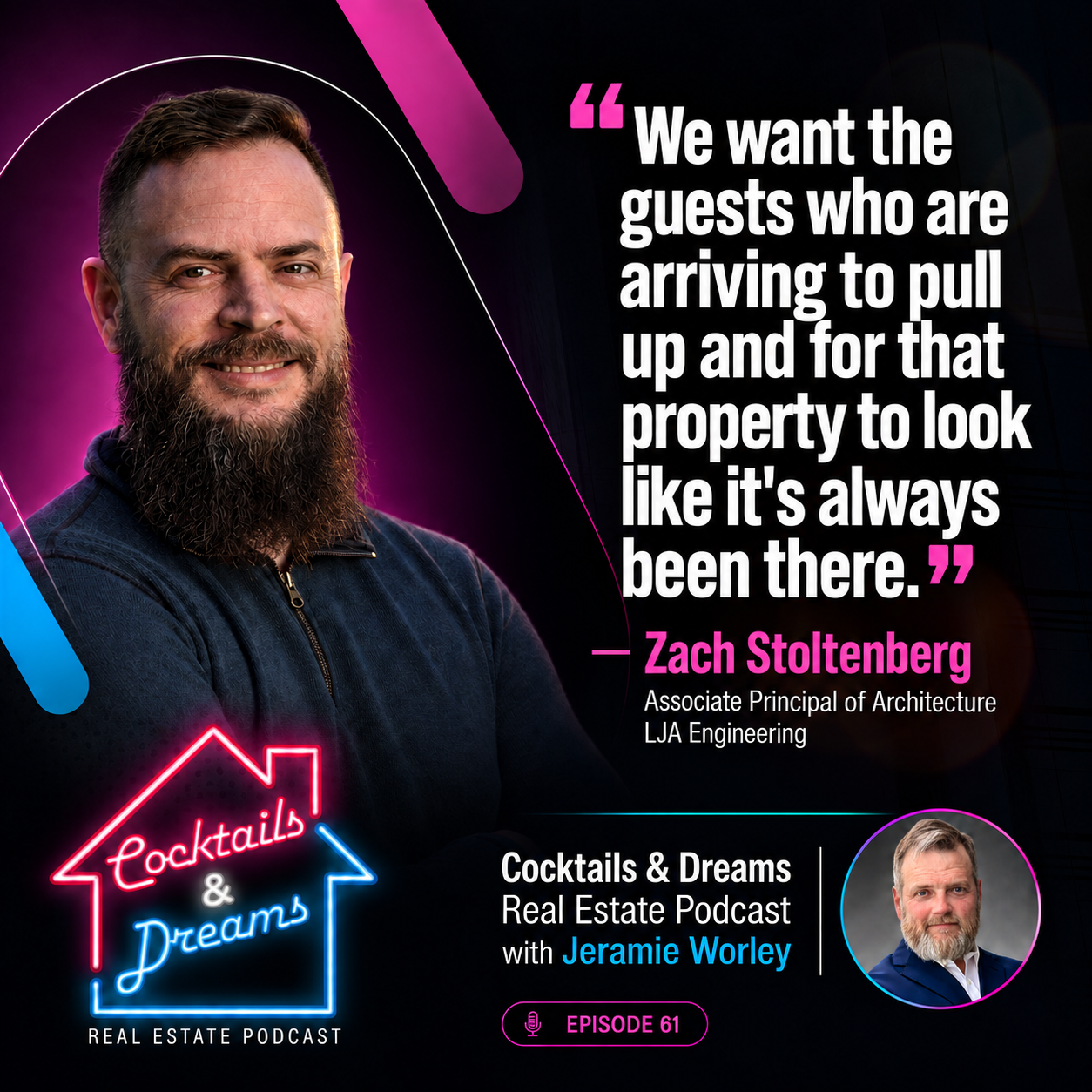
Yeah, we like to say when we're done with a property, we want the guests who are arriving to pull up and for that property to look like it's always been there. Yeah, that literally means these things grew up from the site, that it's almost, you know, untouched. We did, we did a property that had an 80-foot diameter heritage oak tree that was probably more than 200 years old. And that tree became kind of one of the centerpieces of one of our main outdoor areas. We built a whole outdoor amphitheater and kind of venue around just this one tree that's on site. So that's kind of what I was talking about, like when walking a property, finding those things that are special and then applying our program to it. You know, there's a use for this.
Zach Stoltenberg:
There's a way we can generate revenue from this without just coming in and clearing the land.
Jeramie Worley:
You know, I was at my property, my lake property, one time, and I was looking up the hill, and pine trees are so rare in the Ozarks because back in the 20s and 30s, there was a pencil factory out here, and they literally logged all the pine trees out of the area. And so the cedars took over, you know, Cedars are like weeds for us out here.
Zach Stoltenberg:
Yeah, trash trees.
Jeramie Worley:
Yeah, exactly. But it was funny as you go to Kodiak, Alaska, and they'll pay whatever for cedar, you know. So I was like, maybe we could do some, like, you know, salmon and cedar trade or something like that with the Alaskans. But I saw where that tree was located, and I did have to kind of go off of my property just a little ways to find it, but I was desperate to find it because this thing was huge, and just to be able to walk up to that tree and stand under it, I. I named it Grandfather because it was just like this huge tree, and you could see all the little ones around it. And so whenever we find those pine trees on our land, and we have a few at Victory Springs, we.
Instagrammable Design and Repeat Visitation
Jeramie Worley:
We clear out all the cedars around them and give them room to breathe and room to come back to life. Here's a question for you. What would you say the difference is between designing for Instagram and designing for, like, repeat visitation?
Zach Stoltenberg:
I don't know that there's a big difference.
Jeramie Worley:
Okay.
Zach Stoltenberg:
You know, when you approach design from that perspective of guest experience and trying to create things that are meaningful, the Instagrammable moment should be a natural piece right now. That's not to say that there aren't things that we do intentionally for that. I was on a podcast with Derry Green, the founder of The Secret Garden Glamping in the UK. I asked him a question about, you know, what's. What's been your best marketing? Because he still. He's got, I don't know, something like 3 million followers online, still has never spent a dime with Google or Facebook or Meta or any of them on advertising. And he said, honestly, believe it or not, it's. It's a porch swing. And I said, okay, tell me about it.
And I think his wife actually found this porch swing at a, you know, big-box outdoor store or something and brought it to their property. And she said, I want to put this porch swing, like, right here at the entrance. And they put it together and then kind of, you know, dolled it up. It's got flowers that grow up and over it, and it's got a backdrop behind it with their, you know, signage. And he said, literally, absolutely everyone who stays with us pulls into our parking lot, and they see that swing, and they've got to go over and sit down, and they take their first picture, and they immediately log in, and they check in on Instagram or on Facebook, hey, guess where we're staying tonight? And they tag all their friends.
And he's like, you know, when you get online, you see all these pictures, and it's the same picture. It's all these people sitting in the swing to let all their friends know that they stayed at Secret Garden. And he's like, you know, it probably cost, I don't know, four or five hundred dollars, right, to put this all together. And it's been one of their best marketing advertising pieces. And so that's cool. I think that Instagrammable piece, like, yeah, it can be the interior finish in your unit could be your bedding. It can be your shower. You know, that big, deep copper soaker tub. There's certainly design pieces of that, but it can be really simple, too.
It could be a bench sitting at the base of the grandfather that everybody wants that photo, you know, going all the way up into the canopy up above. You know, how often do you get to see that? Right? And so I. I think it's important, but you should look at Instagrammable as if somebody wants to take a picture and post it. Then you've done your job with design. And two.
Jeramie Worley:
Yeah, go ahead.
Zach Stoltenberg:
They're doing your marketing and advertising for you.
Jeramie Worley:
That's a good point. I'm thinking of a development that I purchased some property at Kodiak, Alaska, and there's a tree there that the developers really love. And it's this. I can't even remember the type of tree. It's like a cypress of some kind, but somewhat different. Looks like a big, giant pine tree. Well, this tree had, like, grown up and then broke off, and then it grew kind of out this way, and then it grew up again. So you've got. What it looks like is a tree stump with all of these trees growing straight up. And they call it the mother tree. And we got exactly those pictures that you described from the mother tree. You know, it's a monument, but it's just a piece of nature that, you know, was selected for, you know, exceptional beauty. And.
And we, as humans who get to walk around this beautiful creation, it's fun to take a moment and say, wow, that's worth taking a picture of. But what you were talking about, you're Right. It is that porch swing is that place that gives you that great photo of I have arrived. But then it's that's that photo that brings you back too. It's like, yeah, I want to have that experience again when it comes up in your memories. Right.
Variation, Retention, and Giving Guests a Reason to Return
Zach Stoltenberg:
So on retention, I think the key is not just to be Instagrammable, but to have variation. Okay. And you know, like I mentioned earlier, we want guests to have that feeling when they're leaving that you described. Like, I don't want to go home; I don't want this to end. We want them planning their next stay with us before they even leave the property. And so having different experiences that they can have, having different unit types is really key to retention. You know, having different units at different budget levels is also really important. You know, you might have a, a cheaper, say, a, you know, a very nice but well-appointed cabin wall tent that you do at more of an entry-level rate. You know, maybe it's that $175 to $225 a night. Right.
And that's going to get people who maybe have never tried anything like that before to come out and try it. If we can deliver that premium experience, if they leave that property with that feeling you described. And while they were there, they saw the little A-frame cabin, they saw the yurt, they saw the tree house, they saw the covered wagon. Now not only do they have a good time and they want to come back, they see other things that they can try the next time they come back. This was fun, but next time we come, we're staying in the wagon.
Jeramie Worley:
Kind of like long lines at a theme park. You know, the. I didn't get to experience everything here, so I'm going to come back and stay in the hot sun and stand in line again because I didn't get to do the Incredible Hulk ride. You know, this time.
Zach Stoltenberg:
Again, different experiences for different times. So like, you know, treehouses, we know $800 to $1,000 a night is pretty average industry-wide, nationwide. Right? That's a premium unit. I'm probably not going to spring for that for just a weekend getaway.
Jeramie Worley:
Right.
Zach Stoltenberg:
But I might do that for my anniversary. Today's actually my anniversary. My wife and I've been married 19 years. 7/7/07 was our wedding.
Jeramie Worley:
Congratulations. It feels like forever, though, doesn't it?
Zach Stoltenberg:
I know.
Jeramie Worley:
Congrats.
Zach Stoltenberg:
That's a big, that's a big deal like that. And anniversary weekend, like, absolutely, I would spring for that. We actually just got back from a trip. We went up to New Hampshire to visit my brother, and we booked an off-grid cabin on a river that was about three miles from my brother's house and had an outdoor porch and patio and a swing. And it was very rustic. It did have a flush toilet, but you had to walk to get to it was not in the cabin, but, you know, we had a great experience. We spent two nights, three days out there. We got to drive around, see that whole area, got to spend some time with my brother and his wife, you know, and that was what I was looking for.
Like, there was a hotel in town, there was a bed and breakfast in town, or I could have driven, you know, 20, 30 miles down to Concord and stayed in a traditional hotel, but we didn't, you know, we sought out and looked for something that was different and something that was a unique experience, and waking up in the bed. The cabin was two stories, and the loft upstairs was just barely big enough for a queen bed. But all the way around were windows, and all the windows slid open and were screened, so you could literally, like, I woke up in the morning because the birds were chirping, because the sun was up. And I woke up, and I felt so rested and just relaxed, and being able to breathe in that fresh air. Because we left the windows open all night.
Jeramie Worley:
You did?
Guests Care About Their Story
Zach Stoltenberg:
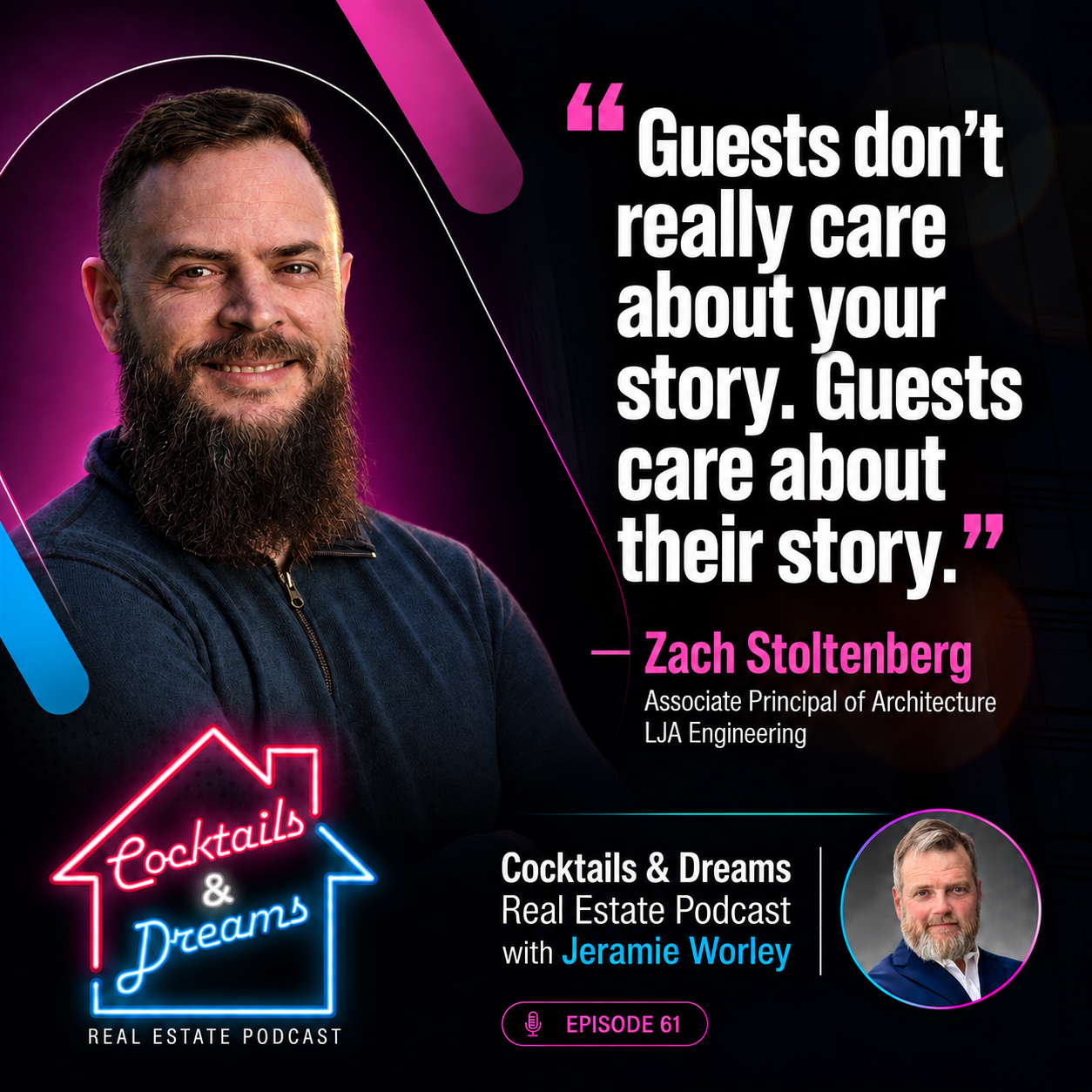
You know, that's what people are after, right? So starting from that guest experience perspective and then designing a space, curating that in an authentic and true way that allows people to build their own memories. We hear on the branding and marketing side; oftentimes I hear people talk about, you know, you got to tell a story. You know, your resort should tell a story. Guests don't really care about your story. Guests care about their story. And so the people in this space that are really successful with creating those guest experiences, that's the way they're approaching it. I'm creating a place and an environment, and I'm putting pieces in place to allow our guests to write that next chapter in their story and to go home with memories and to say, you know what? I reconnected with my kids.
Zach Stoltenberg:
You know, I've got four kids and two of them are teenagers. And so, you know, a day that I can spend one-on-one, it doesn't matter what I'm doing. We can be in the garage working on a car. We could be at the end of A dock, fishing. Anytime I have to spend time one-on-one with my older kids. That is not this. Yeah, it's a win in my book, and I'm willing to pay for that. And so I think that's all those things are key to that retention piece. If I come out, I have a great time with my wife or my family. My kids had a blast, and we're driving home. One thing we always do as a family is when we're driving home, my wife will ask everybody, what was your favorite thing?
Like, pick one thing from the last, you know, four or five days. What was your one thing? What was your favorite thing that we did? And it's always surprising what comes out of it because it's rarely the most expensive thing that we did. It's, you know, my favorite thing was that burger at that place that we stopped at on Thursday night.
Jeramie Worley:
Like, you know, discovering those unique places too are also super fun, you know, and. Yeah, and you know, you're right. I was out doing something, working on the land and I came home just extremely exhausted, tired. My 17-year-old son was like, Hey, Dad, you want to go to the gym? I'm like, yep, where's my shoes? Because he never asked me if I want to do anything. So I'm like, you got to say yes to those things. So here's a question because we've talked a lot about creating experiences, and that being sort of a crux of this. Let me. So I was in a, an acting class one time in Connecticut, and the teacher was very minimalist and she was like, you know, less is always more. When it comes to acting, less is always more.
When Unique Lodging Becomes a Novelty Trap
Jeramie Worley:
There's never a time when more is more. Like, can you think of a time when more is more? And I was like, musical theater, you know, it's like I've, you know, my acting professor was just really big on musical theater, so we got a great education on that. But you know, musical theater is not where you want to go if you're wanting to see, you know, like a David Mamet play, you know. So when does unique lodging become a novelty trap? Or can you go too far with experiential lodging?
Zach Stoltenberg:
Yeah, I think you can.
Jeramie Worley:
Yeah.
The Thousand Little Things That Make Hospitality Work
Zach Stoltenberg:
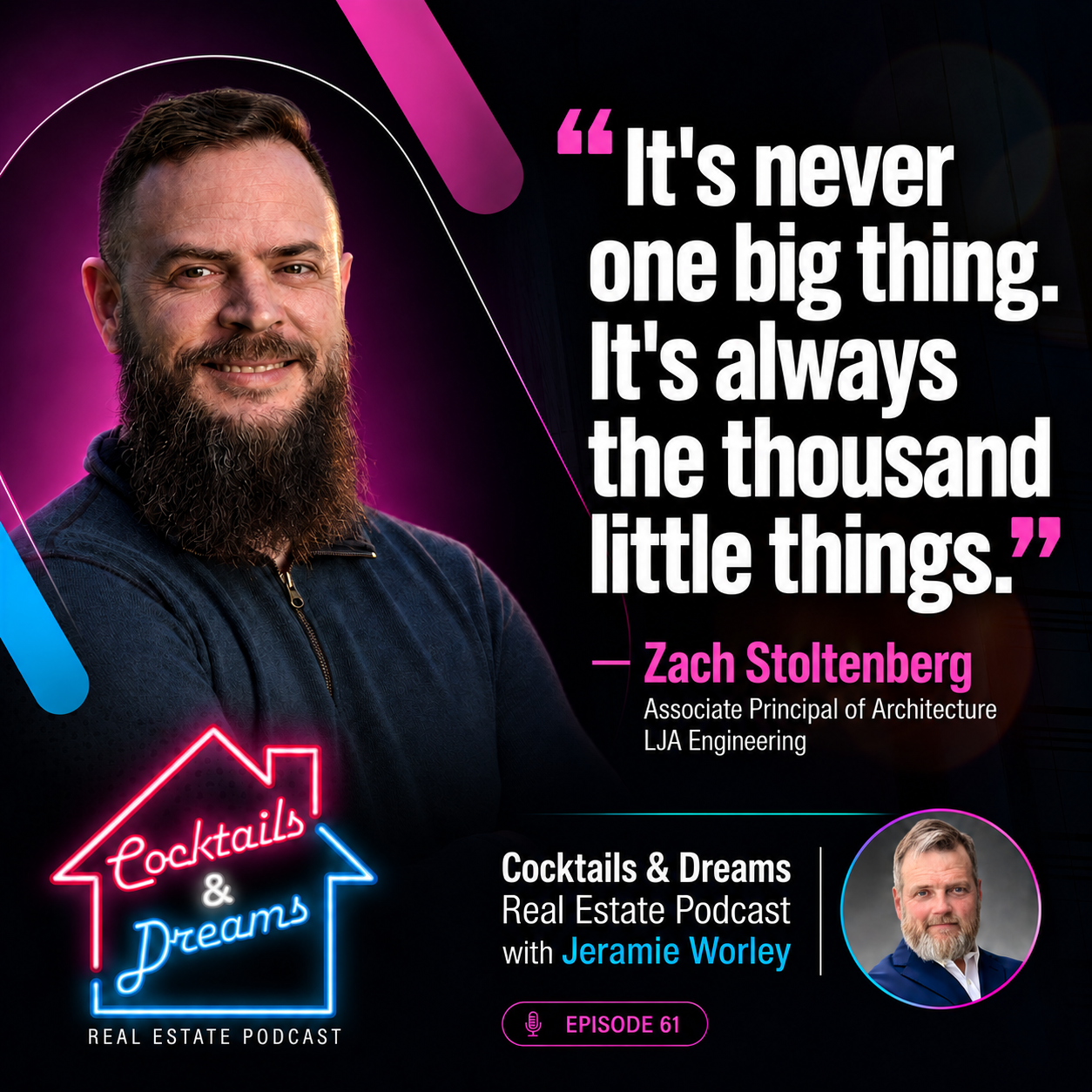
And I think that there's, you know, I mean, we're an emerging industry. So you know, we're just now at the point where we're starting to get some established brands that sort of have a brand standard and a model and a managed guest expectation across multiple sites, you know, and there's some that I think are doing it really well, and there's some that I think have made some big missteps. I don't know that it's always too much. It's never even like one big thing. Like, oh, I can't believe they did this. You know, that's a gigantic mistake. I think when it comes to guest experience, authenticity, it's never one big thing. It's always the thousand little things that are there. Just show a guest that you thought about them, that you anticipated it.
Zach Stoltenberg:
It's having the right coffees in the morning when they get up, and it's, you know, there's nothing I hate worse than you get over there. And it's all but the cheapest K-Cup that they could order, you know, in bulk. A thousand at a time on Amazon, right? It's like, no spring for good coffee. Like, that's how somebody's starting their day. You know, if they go over there and it's some generic brand, then you're like, I don't even know. You know, there's probably microplastics in this thing, right? Like, I don't even want to drink it. But if you go over and there's a Green Mountain or there's a Starbucks or there's a Black Rifle Coffee or there's, you know, something that's. Again, it's. That's not a big thing. But there's so many operators that don't think of the details. They don't.
One thing I tell all of our clients that we work with is once you get your first couple units built, go out and stay in them. Stay in them for two days and bring your notebook because you need to experience it like a guest experiences it. You know, when you go to bed that night and you lay down, what does everybody do today? They plug in a cell phone. So I need an outlet. Is it long enough for my cord to reach? Am I, you know, just thinking about some of those things. We try to do a lot of it from a design perspective. You know, the upfront, when we're. We're designing units, drawing plans for things. But there's so many little things with operations, so I don't know that there's any one big misstep or big mistake.
Probably the biggest one, I think, is trying to deliver the same experience for every guest, and it ends up kind of becoming generic and not personalized, you know, when we look at the Uber top, like, the best. If I was going to pick, like, the top five destinations for glamping and outdoor hospitality in this whole country, they all have one thing in common, and that's that they personalize absolutely everything they do to the guests that are staying with them. My wife and I and some friends of ours went out and did kind of a whirlwind tour of the Southwest United States back in May, and we stayed with Bygnal Dutson out at Open Sky. And when I called Bygnal, I mean, I've known him for many years. He's a good friend. We've done work together.
And I said, Biggs, I want to come stay with you. And he goes, what do you want to do? I said, I don't know. Like, yeah, we're going to hit Zion. We're going to hit the national parks and stuff. But I was like, what else, you know, what else is there to do? Like, we've got. I had one day that I didn't really have anything planned for, and I said, I've got one day. And he's like, Don't worry about it. I got you. We'll take care of it. And a couple days before we left, he sent me an address, and he's like, be here at one o’clock.
Jeramie Worley:
One o’clock?
Zach Stoltenberg:
And I was like, okay. We pulled up, and we rented side-by-sides, and he took us out on the sand dunes, and I mean, we tore it up. I got the thing stuck once, you know, perched on the edge of a dune. We rock crawled. We had all sorts of stuff. It's not something I ever would have, like, looked at and said, oh, yes, I want to do that. Let's book. It was something he brought up, and he was like, I know you'll enjoy this, and we're going to come with you. We're going to go do it together. And we had a blast. And, you know, when we got back, he said, so you guys are doing the park tomorrow? Yes. Do you want us to pack lunches for you guys? Literally, everything about our stay, they were taking care of us.
They were thinking about things we hadn't thought about yet. They were making sure that all the little stuff was met and just worked. And we had a great time, had an absolute blast, spent two nights out there.
Hospitality Means Thinking Ahead of the Guest
Jeramie Worley:
That's kind of the definition of hospitality, in my opinion. And I've said that on my blog: hospitality, to me, means that we've been thinking about you a long time before. You've ever arrived. And I think that's the case because my wife, especially in our nightly rental portfolio that we have, she's always trying to think about the mom, you know, and so what was forgotten that we can easily provide for somebody. What's that? What's in that welcome basket that, if somebody wanted to just take and dump on their purse, fine. I mean, that's fine. But that's not what it's for. It's for you that forgot the charger. It's for you that forgot the toothbrush. It's for you that needs a little, you know, little shot of wine. Because I just got here and I'm. And I just need something.
Zach Stoltenberg:
You know, every suite should have a bottle opener in it. I mean, you could get them for $1.99 at the grocery store. I don't know how many times my wife and I have thought, oh, let's stop and pick up a bottle of wine. Or went to a winery and we bought two bottles, and we got back to where we were staying that night, had no way to open it. Yeah, it's those little things that just show that your host was thoughtful.
Jeramie Worley:
Yeah. Care. I had to make ice cubes in half cup, fourth cup, one tablespoon, half tablespoon. I mean, I had to have ice for my beverages there because there was no ice trays, you know. So, yeah, we do everything right down to the blender. So it's interesting for us for the glamping units because, you know, you do, you can't put everything in it. You can't really have a full kitchen. So you have to, you don't need one. You kind of have to be selective there. So talk to me a little bit about kitchens and why it matters for glamping.
Food, Convenience, and Turning Friction Into Experience
Zach Stoltenberg:
So in most of our units, I don't do a kitchen. We design what we call a concierge. It's got a mini fridge, it's got a microwave, it's got a coffee maker. You've got a sink in the bathroom. You don't need a sink. We don't want the guest experience we're trying to deliver to someone. We don't want them. You know, you say, think about the moms, right? Like, I think about my wife all the time at 4 o’clock, when the heathens start getting ravenous, you know, behavior changes, and she's like, oh, what are we going to do for dinner? And it becomes this kind of freak-out. Moment, right. And then she has to stop doing whatever she's doing to go pull dinner together. And that takes, you know, half hour, 45 minutes, and then half an hour to eat.
And then, you know, we're pushing on bedtime for my little ones. And so it just, that isn't, that's what we do every night at home. That's not a getaway, that's not a respite, that's not, you know, taken care of. And people don't always want to. You know, eating out is not the solution either. Right. Because that is, I gotta, you know, we've been out of the lake all day; I haven't even showered yet. I don't want to go sit at a restaurant, or it's a 20- or 30-minute drive into town to wait 10 minutes to get a table. It's going to take an hour to eat; it's gonna be dark when we get out. And then we gotta drive all the way back and do all of this. And so I think it's finding that middle ground. Right?
How do we take something right now that's a challenge or problem and create an experience? One thing I love, and you mentioned it earlier, it's that little guest basket. If you've got a mini fridge in there, it shouldn't be empty. It should have a couple bottles of water, a couple sodas, a red wine, a white wine, a few cans of beer. Just outfit it. Spend 20 bucks and outfit it. Most guests are not going to drink everything in there. And if they do, who cares? Because they paid for it, you charged them for it. Put that little basket up on top that's got some gummy bears, some candy bars, some granola bars, a bag of potato chips. Just some basic stuff that if I'm just a little nibble hungry or we got plans for the day.
Yeah, Mom, throw them in your purse, take them with you. You know that car trip back when Junior starts acting up a little bit because he's hungry? You got something you can pull? Because the resort thought about it when you weren't thinking about it and gave you what you needed to get through that. Right. For actual meals. I would much prefer them to come down somewhere on site and dine with us. That on-site F&B is a huge driving factor. And again, we look at some of the best resorts that are out there; they make that easy, they make it convenient, and they're hitting premium levels. I mean, I mentioned the stay at Open Sky; easily one of the top three meals I've ever had in my entire life was at their restaurant.
And their chef did an awesome job taking care of us.
Jeramie Worley:
It's just open from, you know, time A to time B, and you can just wander in, grab a table kind of.
Zach Stoltenberg:
They do reservation only.
Jeramie Worley:
Oh, they do.
Zach Stoltenberg:
But again, like when we checked in, they said, do you want to dine with us? Yes. When? Which night? You want lunch, you want dinner, we'll make your reservations, we'll take care of it for you. You know, they asked about dietary restrictions, all of it, so the chef could make sure that he had something that would, you know, something for everybody that was in our group. Right. Just again, demonstrating that thoughtfulness. So I like on-site F&B. If you've got on-site F&B, you don't need kitchens in your units. You want people to come down and dine with you. You want them to have that experience. And then there's always some good middle grounds in there too. You know, I have a lot of people that'll look at some of the units we design and say, well, where's the stove?
You know, I want people to stay three, four, five days. Where's the stove? Yeah, and I'll, I get it. And that can be a fun experience, actually. Like cooking together as a family. And so usually I'd say, okay, if you want a kitchen, great, let's do a kitchen. But it goes outside.
Jeramie Worley:
Correct.
Zach Stoltenberg:
I don't want the smells and everything filling up that unit, you know, so let's build the kitchen outside. Let's put a pizza oven in there. Because I can do frozen pizza crusts. I can do little containers with all the toppings in there. When somebody books that, they want to stay with us. Great. Do you want to, do you want to add a package for four personal pizzas, and we'll have all the stuff sitting in a cooler in your unit waiting for you? Burgers, you know, pre-made patties, bag of buns, all the toppings, build-your-own cheeseburgers, all that stuff, put together a little kit, and they just book it when they book their stay.
Yeah, we, you know, we booked a, a burger kit for two for tonight and run it up, you know, have your manager, whatever, take a golf cart out and drop it off at 5, 5:30. Right before they're ready for dinner.
Jeramie Worley:
Yeah, right in that mini fridge, ready to go.
Zach Stoltenberg:
And you got, you know, you can do a barbecue grill. You can do a lot on a barbecue grill.
Jeramie Worley:
Tell me about it. Even the grill. Yeah.
Zach Stoltenberg:
Even an open campfire. Just that open pit, you know, and then there's some things. Yes, Mr.
Jeramie Worley:
Boy Scout. I mean, come on. I mean, what you can do, you can make a hobo dinner. Anything.
Thoughtfulness, Perceived Value, and Transformation
Zach Stoltenberg:
Yes. And then things like, you know, the pie irons. It's two pieces of bread and pie filling. But again, it gets a family, gets kids, a reason to sit around a campfire together at night and do something fun. And, you know, I always hate, like. And it happens all the time. I'm sure everybody can identify that with this. You go out to a nice restaurant, you have an incredible dinner, everybody's full. And then what does the waitress do? She comes around and says, Can I interest you in dessert? Right there, all is it. And it takes it from being like a good thing. Everybody loves dessert. Like, that's a positive thing.
Jeramie Worley:
Yeah.
Zach Stoltenberg:
But it creates a negative experience because it feels inauthentic. It feels like they're just trying to run your bill up. They're trying to get you to spend more money. They can see that you're stuffed; nobody can even sit up straight. Right. And they're trying to force more food on you know, versus, no, we're not going to do dessert, but we'll go back because we're going to do s'mores and then creating that little, you know, kind of curated experience kit. Right. It's not just the jumbo marshmallow from the grocery store. Maybe it's a. Maybe it's a homemade, custom square marshmallow that the resort name is printed on the top. There's a great company that does custom marshmallows that you can brand and tie back to the experience. You know, when you roast it, the.
Jeramie Worley:
Name becomes even more apparent.
Zach Stoltenberg:
I love the Hershey's. I'm an original guy. But my wife and my daughter, they like the Reese's cups. You know, so putting a couple again, it's not just doing s'mores; it's doing the extra. It's taking it up a notch. It's giving somebody an experience that they wouldn't have at home. And then it feels not only thoughtful and authentic, but it creates that perception of value. You know, what does it really take to do something like that? I mean, you're talking five, six dollars worth of ingredients. You know, what does it take to fill that mini fridge? 20 Bucks. Charge for it. You know, if you raise your room rate by $20 to $25 a night, cover it. But what. What we've done is we've changed that perception of value and that guest experience.
You know, we're all used to coming into a hotel and mom and dad yelling at you, like, don't touch that. That's like $4 a candy bar in there. Or, you know, I was in Vegas a few weeks ago; they had the little minibar in the room, they were $16 for a two-ounce bottle of liquor. And then the new technology, they got these little things that they sense any movement. So if you even bump a bottle, it sets off a switch, and you automatically get charged for it.
Jeramie Worley:
Oh, gee.
Zach Stoltenberg:
And again, it's supposed to be there for your convenience, but it's created a really negative guest experience because it's become transactional. It's all about the money. It's about the finances. And I think one thing that sets hospitality and successful hospitality in general, but especially outdoor hospitality apart, is that we're creating experiences that are transactional but feel transformational.
Jeramie Worley:
That's well said. And I think you hit on something that's been growing curiosity in me as well. So when we're talking about not having a kitchen in the property, I mean, that's an experience in and of itself. How do you eat? What kinds of things would you do differently for these four days that you wouldn't normally do when you're at home, and you remember the show The Dukes of Hazzard?
Zach Stoltenberg:
Too young, thank God.
Jeramie Worley:
Okay, well, everybody knows.
Zach Stoltenberg:
I know who they are. Yes, I know what it is.
Make the Property Part of the Story
Jeramie Worley:
Right. So Gen Xer alert. So the Dukes of Hazzard, the General Lee, it had a name, right? And the car itself was a character. And you couldn't wait to see those good old boys get in that car and jump and escape the cops. Right? And we waited every single episode for that General Lee a jump. Feel bad for the producers that had to go through so many cars every time they wrecked, you know, but the car itself was a character. It was a cast. It was in the cast. And I've got a property in Branson that my wife and I just launched a year ago. It's already won some pretty cool awards. It's called the Chill Pickle. And I wanted the property itself to be a character. And it's just a six-bedroom short-term rental with a private pickleball court.
Because we knew that was trending, and we knew that there was people looking for that specifically. But what else about the property can you discover when you're in there? There's so many funny pictures, odd things that when you look at, you kind of gravitate towards it. And now you've stumbled on a treasure hunt or you've stumbled on something else, or a fun thing that now, if our goal was, is that if somebody comes to Branson and it rains for your whole vacation and they stayed at the Chill Pickle, whether they use it or not, they're still having a good time. And so I think with outdoor hospitality, you know, you can really push that even more with some of the things you're talking about. Any last things that you want to share about your industry or your passions or anything left unsaid?
What Comes Next in Outdoor Hospitality
Zach Stoltenberg:
I'm just really excited for the things that are still to come. You know, when I look at even just some of the projects that we're on right now, you know, we've got a project that's on a private island in the Bahamas that's just wrapping up their phase one of construction and getting ready to open their main kind of base camp. That's gonna be incredible. And it's an hour flight from Miami. There's some that I can't even talk about, but suffice it to say, you will hear about it in the next year. We'll probably be in every website and every newspaper, every magazine, Condé Nast Traveler, Leisure. I mean, it's going to be truly a landmark. A property out near Moab in Utah. Awesome.
Jeramie Worley:
Can't wait.
Zach Stoltenberg:
Something really unique that has not been done anywhere in the United States ever before, you know, and I think about just some of the new stuff, things like Victory Springs and, you know, some of the really, I think, innovative approaches to developing unique properties, creating unique guest experiences and stays that I'm really excited for, the things that are still coming and some of the really creative things that we're just now starting to see the first parts happen.
Jeramie Worley:
Well, thanks for sharing your expertise and your wisdom and all of your good opinions. We'd love to have you take a deeper look at our project sometime, and I'm really thankful to have met you, and I hope we get to do more work together in the future, sir.
Zach Stoltenberg:
Absolutely. I mean, when you and I first talked, and I looked at everything you put together, I said this, you know, this is exciting. This is, this is really incredible. And the property is just beautiful.
Jeramie Worley:
We hope so. I mean, that experience is already there. I mean, people have been coming for generations to those cliffs, to jump off those cliffs, but they can only get there by boat. So we thought, well, what if we gave them a really cool place to stay so now they could walk down and. And then what else can we do so that cliff jumping isn't the only thing that they do. It's kind of the fun part, you know?\
Zach Stoltenberg:
Yeah. So, no, I think you've got a lot of opportunities, and I look forward to it because I think we could do some cool things together too.
Jeramie Worley:
Cool. Well, I'll be in touch then. And thanks again for your time today and all the great opinions. Appreciate that very much.
Zach Stoltenberg:
Thanks for the invite.
Guest / Company Connection
Zach Stoltenberg works with LJA Engineering in architecture and outdoor hospitality, helping clients think through the design, entitlement, and planning of experiential stays. In this episode, he explains how that work differs from treating hospitality as a standard accommodation product and why guest experience, site context, and operational reality have to work together.
Victory Springs Connection
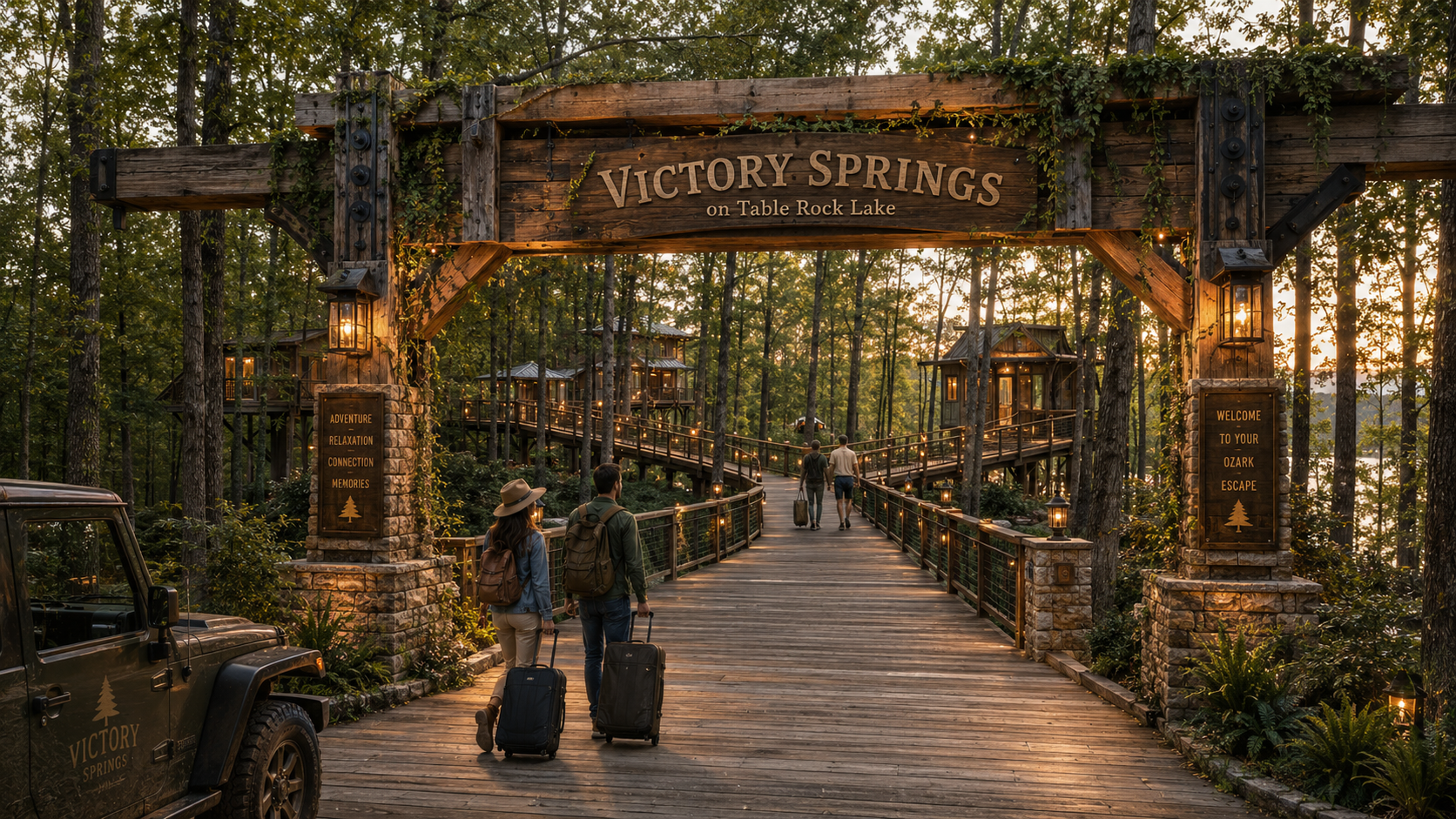
Victory Springs becomes a live case study throughout the conversation. Jeramie and Zach discuss using the lakefront and existing terrain rather than fighting the land, preserving mature trees and natural features, balancing private amenities with common gathering areas, and building enough variety into the property that guests have a reason to return for a different experience.
Listen to Cocktails & Dreams
YouTube: https://youtu.be/0rr-8EAsgfs
Spotify: https://open.spotify.com/show/2oWeHLsHQVSJJjU9GtRBBK?si=c8d75a9deed4411f
Apple Podcasts: https://podcasts.apple.com/us/podcast/cocktails-dreams-real-estate-podcast/id1632712936
About Cocktails & Dreams
Cocktails & Dreams Real Estate Podcast with Jeramie Worley is a long-form conversation about real estate, development, hospitality, investing, entrepreneurship and the people building interesting projects. The show focuses on practical lessons, real projects and the decisions behind the finished product.