Addressing Save the Cliffs: Victory Springs and Battleship Rock
There was a time when people saw a post on Change.org titled "Save the Cliffs," and a lot of people rushed to sign it.
I understand why.
If someone sees the words "Save the Cliffs" and they know anything about Battleship Rock, Table Rock Lake, or the Ozarks, it is going to get their attention. It would get mine too.
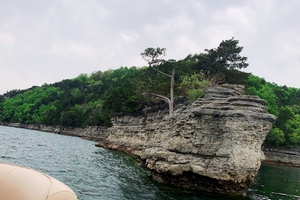
Battleship Rock is special.
It is not merely another piece of shoreline on Table Rock Lake. For many people, it is a memory. It is the cliff they jumped from. It is the place they boated to with friends. It is the picture they took when the lake was calm, and the sun hit the rocks the right way. It is one of those rare places that becomes part of the story people tell about growing up around Table Rock Lake, vacationing in Branson, or discovering the Ozarks for the first time.
So when people say they want to protect it, I understand that.
In fact, that is one of the reasons we bought it.
During the early stages of the Victory Springs development process, there were people who launched online opposition to the project. They never interviewed us. They never sat down with us to understand the plan. They did not ask why we bought the land, what kind of development philosophy we had, or what we believed should happen at Battleship Rock.
Instead, they put out sensational claims and attempted to rally people to stop the development.
It did not stop the project.
But it did prove something important.
It proved that people love Battleship Rock.
Nearly 12,000 people showed interest in protecting that place. I do not look at that as a bad thing. I look at that as confirmation that this landmark matters.
The mistake was assuming that development automatically means destruction.
That is not why we are here.
Before Victory Springs, my partners and I spent years working with developers, investors, and short-term rental operators throughout the Branson and Table Rock Lake market. We worked as consultants, listing agents, and boots-on-the-ground operators in an industry that was changing quickly.
Developers would come to us and ask what kind of products guests wanted. They wanted to know what investors would buy, what layouts would perform, what locations mattered, and what amenities actually made a difference.
That gave us a front-row seat to what was happening in the market.
And over time, we saw a pattern.
Too many developments were built around a maximum density.
More units. More rooftops. More pavement. More cleared land. More inventory.
That model may look good on a spreadsheet, but it often comes at a cost. Trees get removed. Natural character gets stripped away. Hillsides get flattened. The very thing people came to experience starts disappearing.
The most successful places, in our opinion, were different.
They were the places where nature was preserved, where the land still felt like the Ozarks, and where the guest did not feel boxed into another generic vacation rental neighborhood.
That is the difference we want Victory Springs to represent.
When my partners and I stood out on the cliff at Battleship Rock and looked across Table Rock Lake, we did not say, "How many units can we cram onto this property?"
We said, "This place needs to be protected from that kind of thinking."
It needs a future.
It needs local advocates.
It needs people who understand both the land and the hospitality opportunity. It needs people who see the trees, the rocks, the water, and the history as the entire reason the project should exist, not as obstacles to be removed.
That is why Victory Springs' vision is both nature-forward and design-forward.
Nature-forward means we are trying to preserve the feeling of the land instead of wiping it clean and rebuilding something generic.
Design-forward means we are not treating the land as leftover space around buildings. The land, the views, the trails, the water access, the trees, the rock, the guest flow, and the architecture all need to work together.
The goal is not to dominate the property.
The goal is to create a resort experience that feels like it belongs there.
That is harder.
It takes more thought. It takes more planning. It takes more patience. Sometimes it means working around trees instead of removing them. Sometimes it means adjusting a plan because the land is telling you something. Sometimes it means spending more time and money to protect the thing that made the property valuable in the first place.
But that is the point.
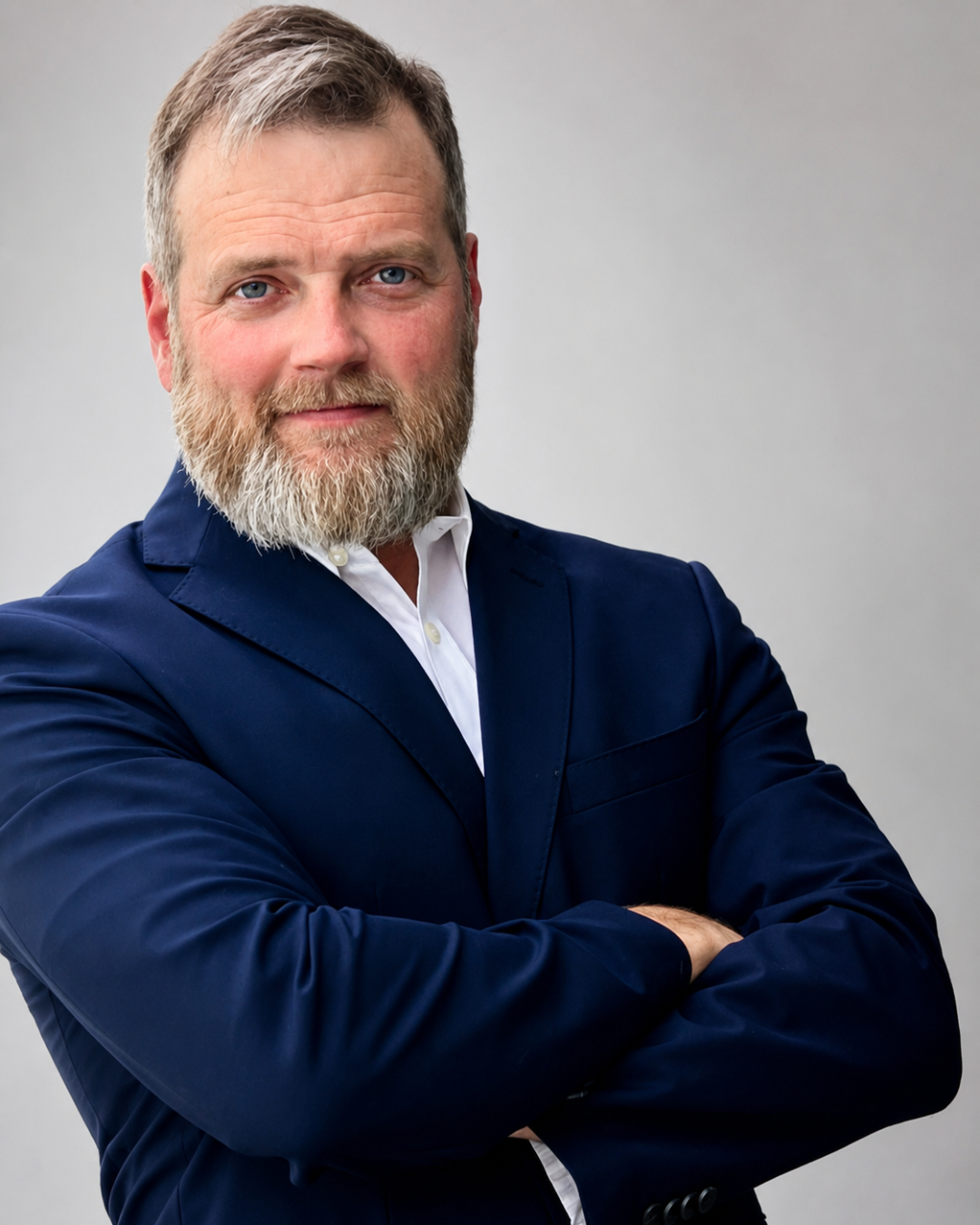
My partner, Brad Youngblood, is a fifth-generation Taney County local. This place is not abstract to him. It is home.
I am a native Missourian. I grew up coming to Branson from the St. Louis area as a kid. I moved here in 1998, and I could have moved anywhere in the country. I chose Branson because I loved it. I raised three children here. They went to Branson High School. My family's life is tied to this community.
So even though I was not born in Taney County, I consider myself an adopted local. This place has shaped my life, my career, and my family.
That matters.
Because when land like this gets developed, the question is not only what gets built.
The question is who is responsible for the outcome.
Do they understand the community?
Do they understand the lake?
Do they understand why people care?
Do they see Battleship Rock as a marketing hook, or do they understand that it is a landmark people already love?
For us, the answer is simple.
The land is the amenity.
Battleship Rock is the story.
Table Rock Lake is the draw.
The Ozarks are the reason people come.
The last thing we want to do is destroy that.
The last thing we want to do is clear-cut the character out of the land.
The last thing we want to do is turn a generational landmark into another forgettable development.
Victory Springs is being planned around a different idea. We want guests to experience Battleship Rock, Table Rock Lake, and the surrounding land in a way that feels intentional, respectful, and memorable.
That means giving families a chance to walk toward the water, launch a kayak, fish, sit by a fire, and feel like they are actually staying in the Ozarks instead of merely looking a tht4em from a distance.
There is a big difference between exploiting a place and stewarding a place.
We are choosing stewardship.
And I know that word gets overused, so let me say it plainly.
We are not simply signing a petition from the sidelines.
We are putting our own time, money, effort, risk, and reputation into creating a future for this place.
We are doing the hard work. The planning work. The infrastructure work. The design work. The investment work. The uncomfortable work.
Because preserving a landmark does not happen by shouting about it online.
It happens by showing up, taking responsibility, and making decisions that honor the place.
Would we sign a petition to save the cliffs?
Yes.
But we are going further than that.
We are working to make sure Battleship Rock remains meaningful, accessible, and protected as part of a larger nature-forward resort experience that families can enjoy for generations.
That is the real story of Victory Springs.
Not destruction.
Not clear-cutting.
Not outsiders coming in to take something away.
The story is local advocacy, responsible development, thoughtful design, and a belief that Battleship Rock deserves more than rumor, fear, or neglect.
It deserves a future.
And we are committed to building that future carefully.