A Family Vacation Should Not Feel Like Relocating Your Chores
There is a particular kind of vacation that looks relaxing in photographs and feels suspiciously like work when you are the person organizing it.
You choose the destination. Compare properties. Coordinate schedules. Decide who is sleeping where. Figure out food. Book attractions. Explain the plan to the children. Explain it again. Load the car. Remember the chargers. Find the reservation. Decide where everyone is eating tomorrow. Clean up breakfast because somehow you are still the adult in charge, only now the sink has a better view.
At some point you realize you did not escape the household. You relocated it. This is one of the distinctions I think the next generation of hospitality has to confront.
Vacation rentals solved an enormous problem for families by giving them what conventional hotel rooms often could not: kitchens, living areas, multiple bedrooms and the ability to gather under one roof. I have spent much of my career advocating for that asset class because I have watched families use it in ways hotels were not designed to accommodate.
But a house alone does not remove the work of traveling. Hospitality begins when somebody starts thinking about the burden the guest is carrying.
That burden starts before check-in. It starts during the booking process. I want the decision to visit Victory Springs to feel less like launching a small project and more like a confident yes: Yes, Victory Springs.
Yes, we want those options. Yes, we are going.
The mechanics behind how we create that experience are something we are still developing, and some of those decisions belong inside the operating playbook rather than a public article. The philosophy, however, is simple enough to say publicly: the guest should not have to become an expert in our property to enjoy our property.
There is good evidence that families respond to that kind of simplicity. TUI's 2026 family travel analysis found that parents were prioritizing practical features such as manageable transfers, room layouts built for real family life and food options that reduce daily decision-making. One of TUI's longtime travel advisors described all-inclusive dining as attractive in part because it removes problems before they happen.
I do not read that as an argument that every family wants the same package or that every experience should be all-inclusive. I read it as evidence that cognitive load has become part of hospitality.
People will pay for convenience, but they also want control. That combination is important.
One family may want to keep the trip simple, cook together, spend time outdoors, and make very few add-on choices. Another family may be celebrating something and want a higher level of assistance. The luxury is not forcing either family into the other's vacation.
Cornell hospitality research has explored a related concept called psychological ownership. In a 2025 study summarized by Cornell, hotel guests who were given ways to exercise more control over their room showed stronger attachment to the property and greater willingness to recommend it. Cornell's summary of that research is interesting because it suggests that good service is not always doing more for the guest. Sometimes it is giving the guest the right amount of control. That fits the way I think about convenience: at its best, convenience is optionality sitting quietly in the background. It is there when you want help and gets out of the way when you do not.
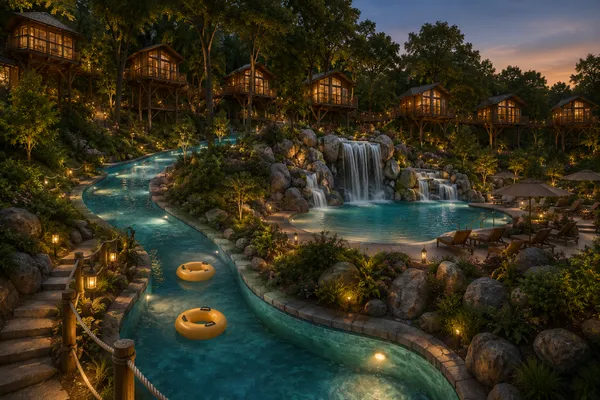
A recent MSN article featuring Victory Springs described centralized hospitality as a way a destination can anticipate needs instead of leaving every logistical detail to the guest. That idea is very close to our intent. Victory Springs is being developed as a branded hospitality environment, not simply a collection of unrelated nightly rentals that happen to share a road.
That distinction shapes everything from the booking experience to the way we think about the property after arrival. The goal is not to make people dependent on us. It is to reduce the number of unnecessary decisions standing between a family and the reason they traveled in the first place.
I do not want parents spending the first afternoon learning our systems. I do not want a guest to feel as though they need a spreadsheet to understand the options. I do not want hospitality to become another source of homework.
The best version of service is often almost invisible. The guest simply feels that the trip is easier than expected.
That is a surprisingly high bar because ease has to be designed. It requires operations, communication, technology, people and physical spaces to work together. Cornell's guest-experience curriculum describes that work as a systematic alignment of guest needs, brand, design and process. That framework is a useful reminder that effortless hospitality usually rests on a great deal of intentional work behind the scenes.
The guest does not need to see all of that work. They have already done enough work to get there.